
You may have noticed this post came sooner than usual. That’s because the wait to move onto the new season, Season Three, is absolutely tearing me apart. I’m half minded to give you guys a short and sweet post, just a few paragraphs. But no- no cutting corners at In With The Old. We’ll do this the right way (maybe a little shorter?) We will see. If you have not yet read my post about Season One, I recommend starting there. While Season One is set in 1882, Season Two is set within the next calendar year, 1883.
Where to watch? The Gilded Age is on (HBO) Max. There are eight episodes and they all run around one hour of screen time. In my last post, an honorable mention was given to Julian Fellowes as the mastermind behind the scenes. Julian Fellowes is a British screenwriter, director, actor, novelist, and producer, best known for creating and writing the hit television series Downton Abbey. Fellowes is known for his fascination with British aristocracy, class divisions, and historical settings. His work often explores the interplay between tradition and social change. In a sense, The Gilded Age is the American counterpart to Downtown Abbey.
What to Expect:
This post will be very similar to the post I wrote for Season One. The format will be similar and my forever-promise to never present a timeline of how the plot unfolded still stands. However, we do have new historical topics to discuss. With each topic, I’ll provide a little background on the true history, a tidbit about where in the show the topic was discussed, followed by the question- real, or not real? Let’s begin!
Rival Stages: Competing Theaters in Gilded Age New York
In 1883, New York City had a thriving theater scene, with several notable venues already established — especially around what would later become Times Square. Here are some of the most prominent theaters that existed at the time: The Academy of Music, The Metropolitan Opera House, Wallack’s Theatre, Booth’s Theatre, Niblo’s Garden, The Grand Opera House, and Daly’s Theatre. These theaters showcased operas, musicals, comedy, and drama performances and plays. The two theaters associated most often with New York’s high society were the Academy of Music and The Metropolitan Opera House, also known as “The Met”. While The Met opened in 1883, the Academy of Music was opened nearly three decades prior, in the year 1854. After the Met opened, the Academy began to lose its status among New York’s elite, especially as new money families were excluded from its exclusive opera boxes. In 1926, the building was demolished. The original Met Opera House was demolished in 1967 before moving to a new, state-of-the-art venue at Lincoln Center (West 62nd Street) in 1966, which is still the home of the Metropolitan Opera today.
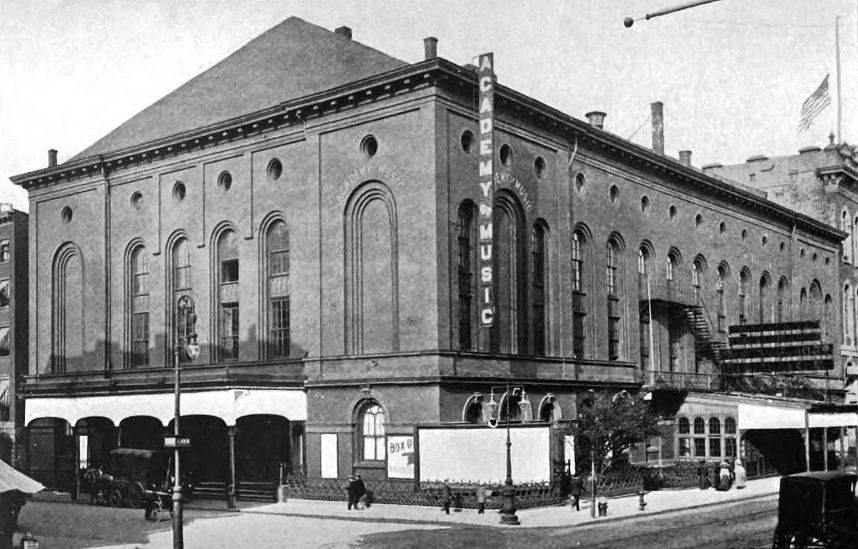
The “battle” between the Metropolitan Opera House and the Academy of Music shown in The Gilded Age is based on a very real social rivalry in 1880s New York. The show exaggerates personalities for drama, but the core conflict — old money vs. new money played out through competing opera houses — is historically accurate. It’s not just one episode where we hear about this so called battle, it’s Bertha’s top focus and obstacle to overcome throughout Season Two.
Portraying Progress: A Look at Tuskegee Institute in The Gilded Age
The Tuskegee Normal School for Colored Teachers, later known as Tuskegee Institute and now Tuskegee University, was founded in 1881 in Tuskegee, Alabama, by educator Booker T. Washington. Established with the support of the Alabama legislature and local Black leaders, the school aimed to provide African Americans with both academic instruction and practical vocational training. Its mission was to prepare Black teachers and skilled workers who could uplift their communities through education, self-reliance, and economic independence in the challenging post-Reconstruction era.
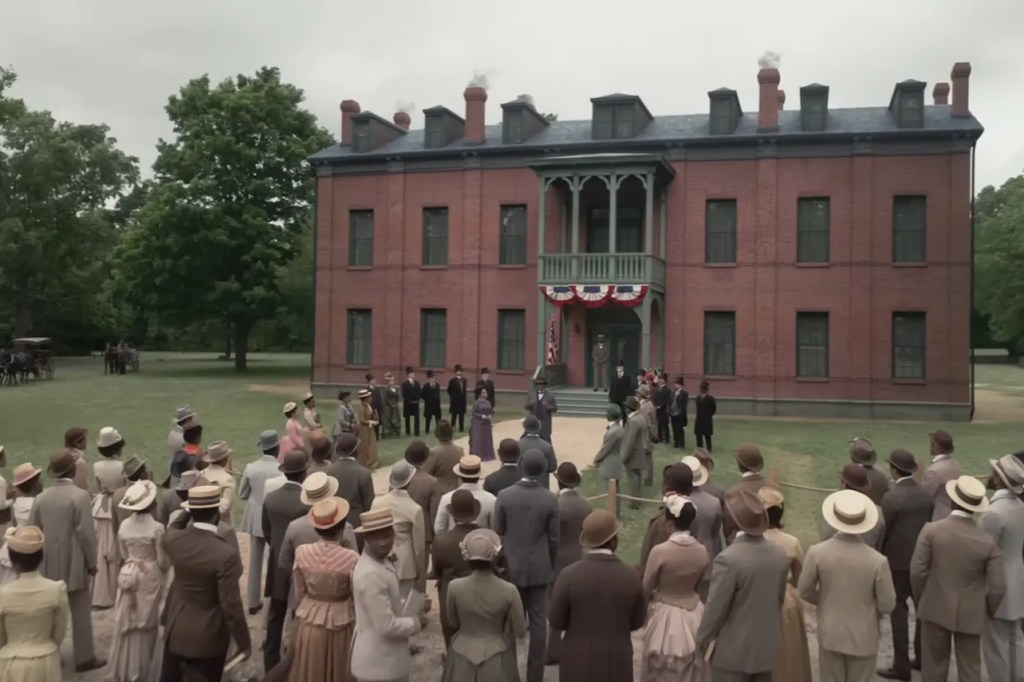
In The Gilded Age, the Tuskegee Institute is introduced through Peggy Scott’s storyline, portraying it as a pioneering school dedicated to educating African Americans and offering both academic and vocational training. The series accurately reflects the institution’s founding purpose under Booker T. Washington’s leadership in 1881 and its emphasis on self-sufficiency, such as students learning trades alongside classroom studies. While Peggy herself is a fictional character, her visit to and involvement with Tuskegee mirrors the experiences of real Black journalists and activists of the era who supported educational advancement. The depiction captures the spirit and mission of the school faithfully, even if the personal narratives are dramatized for storytelling.
British Aristocracy or HBO Invention? The Fictional Duke of The Gilded Age
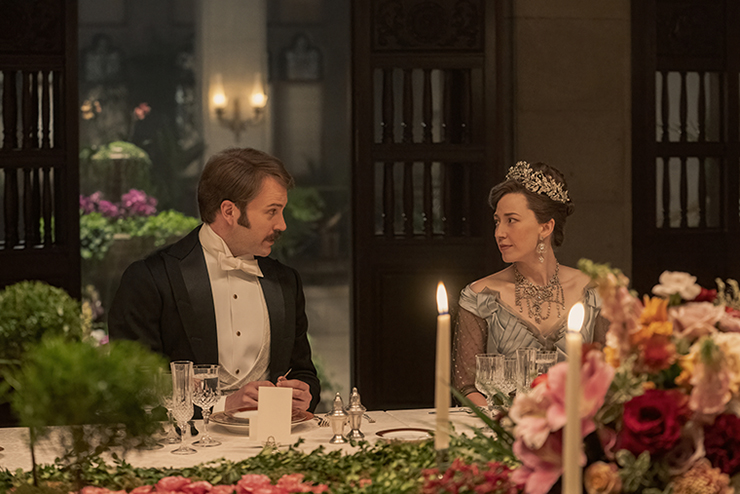
All the high-society in The Gilded Age are constantly swooning over a so-called Duke, the Duke of Buckingham. In the series, he’s portrayed as a charming and high-status figure whose presence adds prestige—and a touch of intrigue—to New York’s social scene. Naturally, to entertain someone with so much status, would be seen as the ultimate power-play. It’s no wonder he becomes a chess piece that the elites move around like a pawn.
While the title “Duke of Buckingham” is real and has belonged to several historical figures in Britain, the specific duke seen in The Gilded Age is not based on an actual person from the 1880s. Instead, he’s a composite character designed to reflect the fascination and social leverage Americans of the Gilded Age often associated with European nobility. In 1883, the title of Duke of Buckingham was held by Richard Temple-Nugent-Brydges-Chandos-Grenville, 3rd Duke of Buckingham and Chandos. He was around 60 years old, had no ties to New York, and no documentation exists that shows he visited New York.
Uncovering the Invisible: The Early Days of Cancer Detection in America
While cancer detection and diagnosis in America began as early as the 1700’s and 1800’s, at this point doctors only recognized cancer when a visible tumor presented. More accurate diagnoses emerged in the mid-1800s as microscopes and biopsies became common. Surgical treatment started in the late 1800’s, followed by the introduction of radiation therapy in the early 1900’s after the discovery of X-rays and radium.
Not naming names, but one of the characters in the Season may or may not have had a cancer scare- what occurred with this character would be considered historically accurate. I’m not saying anything more on this one.
Labor on the Rails: Was There a New York Railroad Strike in 1883?”
During the late 19th century, it was common for union workers to strike because industrialization brought rapid growth but also harsh working conditions. Many workers faced long hours, low pay, unsafe environments, and little job security. Unions formed to demand better wages, shorter workdays, safer workplaces, and fair treatment. Strikes became a primary way for workers to pressure employers to meet these demands since laws and protections for labor rights were minimal or nonexistent. The struggle between growing corporate power and workers’ rights made strikes a frequent and often necessary tactic during this period.
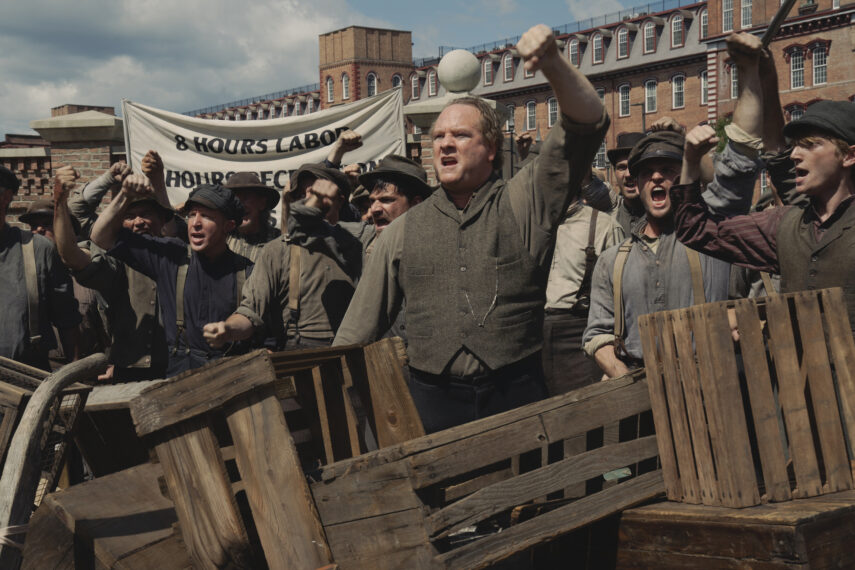
In The Gilded Age, the workers of Mr. Russell organize a strike for all the aforementioned reasons; low wages, long hours, unsafe environments, among other reasons. While there wasn’t a major, widely documented railroad strike specifically in New York City in 1883, the 1880’s saw numerous labor strikes and unrest in the railroad industry across the United States, including significant strikes like the Great Railroad Strike of 1877 and the Burlington Railroad Strike of 1888.
From Humble Roots to Timeless Innovation: The Story of America’s Early Clockmakers
The clock-making industry in the late 19th century was fairly well established, especially in the U.S. and Europe. American companies like Seth Thomas and Ansonia were producing a wide range of clocks, including alarm clocks, wall clocks, and mantel clocks. Alarm clocks were becoming more common but could be somewhat unreliable or imprecise compared to today’s standards because of the mechanical limitations and the quality variations of mass production.
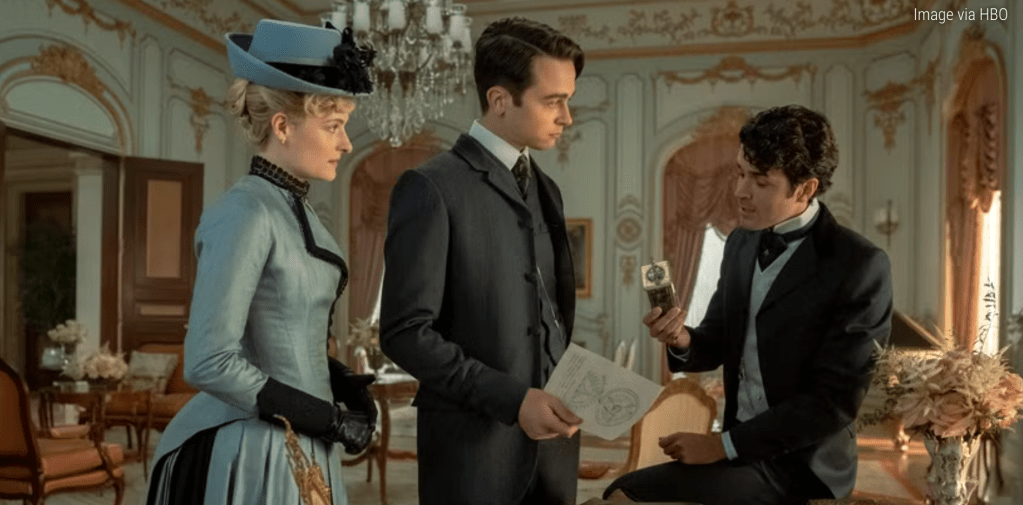
In The Gilded Age, one of the servants of the van Rhijn household, Jack Trotter, begins to actively pursue his dream to be a clockmaker. His story is quite plausible for the time. In the late 19th century, skilled trades like clockmaking were accessible to people who started in service or working-class jobs, especially if they could apprentice or learn the craft. Social mobility was limited but not impossible, and many artisans rose from humble beginnings by gaining specialized skills.
Clockmaking was a respected trade requiring patience and precision, but formal university education wasn’t necessary—apprenticeships and hands-on experience were the main paths in. While the process of getting patents was open, it could be costly and complex, so it would certainly be more difficult for someone with less money to get started.
Bridging History: The Construction of the Brooklyn Bridge and Emily Roebling’s Legacy
The Brooklyn Bridge, completed in 1883, is a historic suspension bridge connecting Manhattan and Brooklyn over the East River. It was designed by John A. Roebling, who unfortunately died early in the project after an accident, leaving his son Washington Roebling to oversee construction. Despite many challenges—including dangerous working conditions that caused “caisson disease” (decompression sickness) among workers—the bridge was finished and became the longest suspension bridge in the world at the time. It was a marvel of engineering, symbolizing innovation and progress during the Gilded Age, and remains an iconic landmark of New York City today.
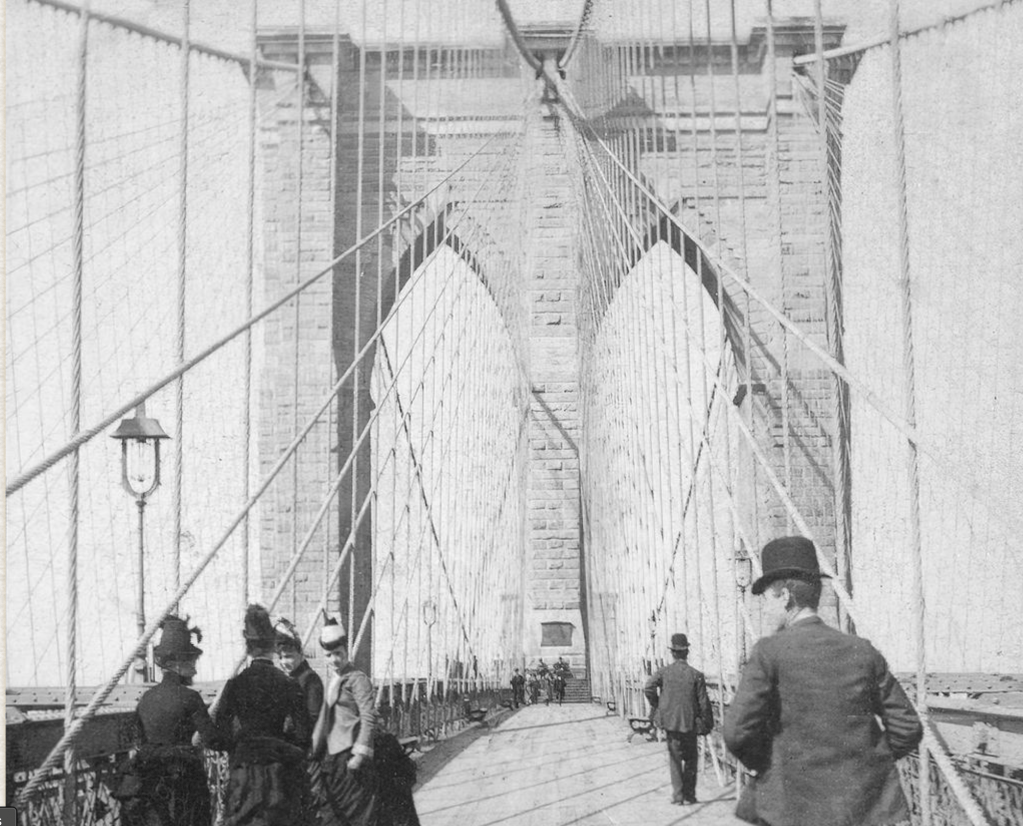
The depiction of the Brooklyn Bridge’s construction and its public unveiling in The Gilded Age is generally historically accurate in broad strokes. The show captures key elements such as the engineering challenges, the downfall of Mr. Roebling, and the bridge’s significance as a marvel of the era. The portrayal of public excitement and the grand opening in 1883 also aligns with historical accounts of the bridge being a celebrated symbol of progress and innovation.
However, Mrs. Emily Roebling was not in fact recognized during this grand opening as a core contributor to its completion. While those close to the project—her husband Washington Roebling and the engineering team—knew of her contributions, the broader public and many historical accounts initially overlooked her involvement due to the era’s gender norms.
To Put it Simply:
In terms of this season being historically accurate, I would have to say that the creators took took a little more artistic freedom this time around; from the decision to have Larry Russell give public props to Emily Roebling for her contributions to the Bridge, to the incorporation of the Duke- but, as you may have seen below, my rating is still high (higher actually). If we had everything 100% spot on to what actually happened, it’d be a documentary. This is a historical drama. Let the drama be. Loved the season, and cannot wait to watch next one.
Rating:
- Cookie points for HBO doing away with Mr. Raikes. Glad to see his extremely unauthentic character ridden from the cast. Marian deserved better, and so did we as watchers.
- Thoroughly enjoyed getting some insight to what life was like in different regions this season- Mr. Russell’s jaunt to the dingy neighborhood of Mr. Henderson, and the work field trip Peggy takes to Alabama. So cool.
- I like that Mr. Russell started checking Bertha for her downright obsessive behaviors related to wanting to be top-dog. Like no Bertha, you being more gawked upon than Mrs. Astor is not more important than his railroad industry.
- The Conjuring universe has a special place in my heart. I love watching Gladys Russell, played by Taissa Farmiga (Sister Irene in The Nun) come “out” in this season. We get to see her character blossom and explore her newfound independence, and I’m genuinely just happy for her.
If you’ve watched season two of The Gilded Age, I want to know what you thought! Please drop your opinions and comments below and I look forward to hearing from you!


Leave a comment