Literally named after an actual historical era, The Gilded Age is a cinematic representation of (primarily) New York in the late-ish 1800’s; 1882 to be precise. Similar to what prompted me to write a post about 1923, a new season (season three) of The Gilded Age has recently been released, as of late June. I have become devoted to the concept of rewatching both season one and season two before I click “play” on Season 3. I will write a blog post about each season as well- and then, only then, will I watch Season 3 a minimum of two times. One for enjoyment, two for research. As per usual, please stay tuned.
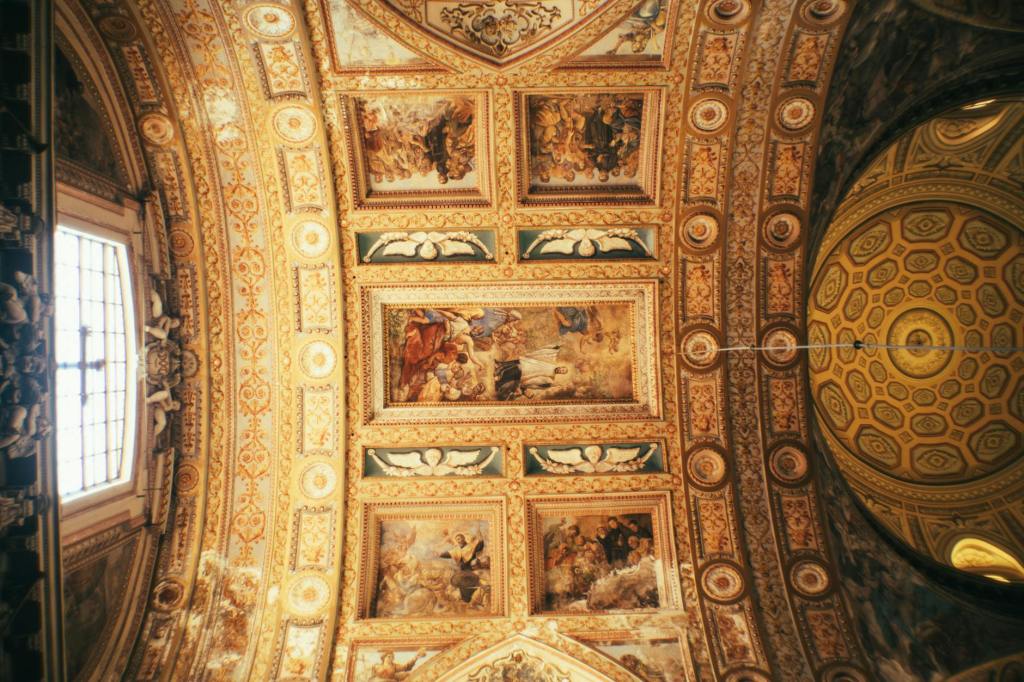
The Gilded Age can be viewed on (HBO) Max. Season One is nine episodes long, with each episode ranging from 45 minutes-55 minutes, accompanied by a season premier and finale totaling over an hour each. There is no shortage of screen time here. Likewise, there is no shortage of individuals who collaborated to make this show come to life. Written and created by Julian Fellowes, and directed by a team of four, The Gilded Age is a historical drama television show that cannot be soon forgotten. In terms of actors and actresses, we have Carrie Coon, Morgan Spector, Louisa Jacobson, Denee Benton, Taissa Farmiga- among many others. Where did the cast film, you ask? While some of the show was actually filmed in New York, most of it was filmed in Newport, Rhode Island. Many of the indoor scenes were filmed inside historical (and lavish!) mansions and museums such as The Breakers and the Marble House. Tours of these sites are available for a price. Whether you’re a Gilded Age fan, history fan, or just like architecture and design, this seems like a great place to visit if you’re ever in Newport. You may visit their site for admission details.

What to Expect:
What not to expect: A play-by-play of what happens throughout the season. What to expect: a review of some of the topics and themes portrayed in the show and whether or not they’re historically accurate. In literary fashion, we will go over what’s true, what’s not true, and what was made up for the sake of the show but not actually a misrepresentation of American history. As we would expect, many of the characters in The Gilded Age cast did not really exist, but in most cases they did represent or were inspired by a historical figure and they’ve just been rebranded under a new identity, in a sense.
As mentioned earlier in this post, the show is set in 1882. We begin briefly in Pennsylvania, stay in New York for most of it, and sometimes take little fancy trips to Newport, Rhode Island.
Old New York Vs. New New York
Old Society. Old Money. What does it mean? Well, to be a part of Old New York, three requirements need to be satisfied (1) A family’s lineage must have been rooted in New York for more than one generation (2) said family must be wealthy. (3) there can be no known scandals, or low-society associations. Since our show is set in 1882, our cast/characters will only be considered “old” if we’re looking at a surname that settled in New York in the early 1800’s (minimum) However, if you research well-known Old New York families from a present-day lens, many of those families became rich in the late 1800’s, when our show is set. In short, what would be considered Old New York in real history, does not exactly align with what would be considered Old New York to this cast. In fact, most of them would be considered New New York, and they would likely be an adversary of the Old New York characters in The Gilded Age. That was certainly a lot of “old” and “new” in such a short span!
The Old society in The Gilded Age is made up of the fictional van Rhijn family and the Fane family; and the non-fictional Astor family, Ward McAllister, Mamie Fish, Livingstons, and Roosevelts. The New society in The Gilded Age is made up primarily of the fictional Russell family.

Let’s delve into the other infamous families that are both a part of real history, but are also a part of The Gilded Age.
Astor Family: The Astor family, particularly Caroline Astor, was a dominant force in New York society. She created the “Four Hundred,” a list of the most socially acceptable families (with the assistance of Ward McAllister) which helped define New York’s elite clique. Her influence extended beyond social circles, as the family’s wealth and legacy shaped parts of New York, including the Astoria neighborhood in Queens.

Mamie Fish: Mamie Fish was a real Gilded Age socialite portrayed in The Gilded Age, was a leading hostess known for her extravagant parties, sharp wit, and rebellious spirit in New York and Newport high society. Though she opposed women’s suffrage and upheld traditional views, her flamboyant lifestyle and famous quips, such as mocking Edith Roosevelt’s frugality, made her a memorable figure who symbolized the excess and shifting dynamics of Gilded Age society.
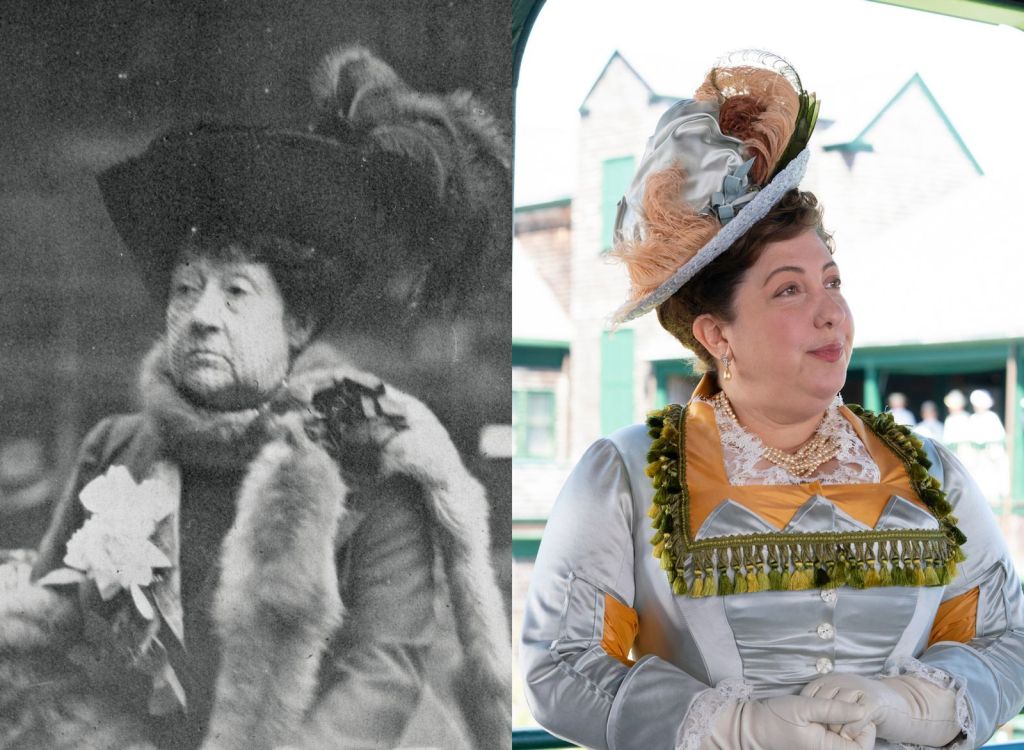
While the van Rhijn ancestry is falsified, in The Gilded Age, Agnes announces that its roots originated from the Livingstons. Who were the Livingstons, you ask?
Livingston Family: The Livingston family was a powerful and influential New York dynasty throughout the 1800s, with deep colonial roots and extensive ties to elite families. Active in politics, business, and society, notable members included Henry Walter Livingston (1768–1810), a U.S. Representative and lawyer who served as secretary to diplomat Gouverneur Morris, and his son, also named Henry Walter Livingston (1798–1848), a wealthy merchant and shipowner. The family expanded into ventures such as the Saratoga Seltzer Spring Water Co. in the late 1860s, maintained social prominence, and contributed to military and civic life, leaving a lasting legacy in New York’s history.
The Roosevelt family: The family was briefly featured peripherally in The Gilded Age, including prominent figures like Theodore Roosevelt, who embodied the era’s elite upbringing and reformist spirit, and his half-brother James “Rosy” Roosevelt, who married into the powerful Astor family by wedding Caroline Astor’s daughter, Helen. This union linked the Roosevelts to the pinnacle of New York high society, reinforcing their status among the old-money aristocracy. Though Theodore and later Franklin D. Roosevelt would move beyond the social rituals of the Gilded Age into progressive politics, their family’s wealth, connections, and values were deeply rooted in the period’s social and cultural landscape.
Unlike the above *real* families, the Russells did not actually exist, however, they were intended to represent the real-life Vanderbilt family. The Russell family in The Gilded Age is a fictionalized representation of the real-life Vanderbilt family, reflecting their rise to wealth and social prominence during the Gilded Age. Like the Vanderbilts, the Russells made their fortune in railroads and faced resistance from New York’s established elite due to their “new money” status. Bertha Russell is particularly inspired by Alva Vanderbilt, who used lavish events and strategic determination to break into high society.

The News of Yesteryear: New York’s Newspaper Scene
Peggy Scott, portrayed by Denée Benton, is a fictional character from the The Gilded Age, who serves as Agnes van Rhijn’s colored secretary and aspires to be a writer. Peggy’s character is similar to that of real-life writer Julia C. Collins, an early African American author and one of the first Black women to publish a novel, The Curse of Caste; or the Slave Bride (1865), recognized for its historical significance in Black women’s literature.
In the show, Peggy’s journey involves navigating the challenges of racism, publishing her work, and eventually finding a platform through the New York Globe- a newspaper that is depicted as a Black-owned publication. Prior to submitting her writings to The New York Globe, Peggy applied as a writer at the Christian Advocate before refusing their conditional offer. So- did these papers really exist, and what about the owner of The New York Globe in The Gilded Age, Timothy Thomas Fortune?
Timothy Thomas Fortune was real. Fortune was a prominent African-American journalist, civil rights activist, and poet born into slavery in Florida. After escaping bondage, he became a leading voice for racial justice, editing influential Black newspapers like The New York Age and advocating against lynching and segregation. He founded the National Afro-American League and was a key forerunner to the NAACP, using his writing to champion equality and civil rights for African Americans. So, slight change to the name of the newspaper he created, but very much the same man.
The Christian Advocate, founded in 1826 in New York City by the Methodist Episcopal Church, was the largest circulating weekly newspaper in the United States by the mid-1830s, reaching an estimated 150,000 readers; published first as a weekly broadsheet and later as a monthly magazine, it was issued under various names, and was very much real.
The Gilded Age of Investing: The Stock Market
Several of the main characters in The Gilded Age dabble with stocks and bonds. The presence of these scenes led me to realize I did not know much about the Exchange, such as where or when it originated. My lack of knowledge is hardly unsurprising- stocks have always been a source of confusion for me that I avoid learning about when possible. Nonetheless, I cannot avoid the subject forever.
According to The Gilder Lehrem Institute of American History, the history of the stock market did not begin in New York, but rather, it began in Philadelphia. The financial epicenter we associate with Wall Street, actually came after Philadelphia’s Chestnut Street. Fast-forward to 1792, ninety years before our show The Gilded Age, twenty-four brokers met under a Buttonwood tree to sign the Buttonwood Agreement, formally creating the New York Stock and Exchange Board (NYSE).
Like all important organizations, there must be a home-base; or structure to house pertinent activities and meetings. Soon after the group conjoined, construction of a coffeehouse commenced on the corner of Wall Street and Water Street. Over the following centuries, the NYSE headquarters would occupy several different buildings in several different locations. Since 1865, the New York Stock Exchange has remained at 11 Wall St., New York, New York.
The show portrays the rapid economic growth and industrialization of the time, which is consistent with historical records. The railroad industry was booming, and entrepreneurs like the Russell’s were making fortunes.
Paving the Way: New York’s Infrastructure Development
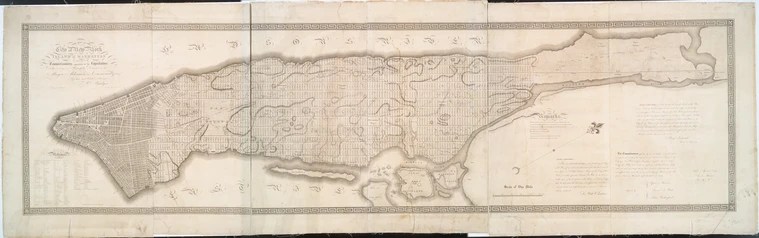
With the city’s population only increasing, it was clear that a proper street grid and well-thought-out infrastructure plan would be required to support the growing number of people traveling to and settling in the urban landscape.
Much of this was discussed at the Commissioners’ Plan of 1811, the plan was a call to action, or a planned design for the streets of Manhattan. An idea to organize them, to turn them into a grid. As a part of the grid layout, the plan featured 12 north/south streets, with many cross streets. Implementation commenced from 1807-1865, with numbered cross streets reaching as high as 155th street.
In our show, the van Rhijn household is located on East 61st Street, on the corner 5th Avenue. The Russell’s live right across the street. In 1882, Fifth Avenue was undergoing significant transformation as a residential street for the city’s wealthiest families during the Gilded Age. Many of the largest homes belonged to the Vanderbilt family.
The Daily Grind: Wait Staff Life in the Gilded Age New York

Ephemeral New York has a great wealth of information on what daily life of a servant looked like during the Gilded Age. As portrayed in The Gilded Age, there were numerous different positions that could be held by servants within a wealthy household. A hierarchy was in place, and there were a lot of tasks that needing tending to.
Tasks included cleaning, laundry, cooking, serving meals and drinks, collecting mail, tending to fires, sewing, shopping, dressing, valet services, and so much more. Depending on how much income the house of household made and the quantity of hired laborers, what a homeowner and its guests would be required to do independently varied, but was typically next to nothing.
Staff members in wealthy homes were provided with an allowance. These workers often lived inside the home they worked for- they would room in either a basement or attic space, but not amongst the same floor as their wealthy employer(s).
While I am sure one could succumb to a “harder” life than the life of a servant who was given room and board and an allowance, it was certainly not an easy life. They had long hours and little “me” time. It provided an opportunistic route for immigrants and other poor individuals to make both a living and have a roof over their head.
I think the depiction of wait-staff in The Gilded Age was fairly accurate, however, like all job positions, a bad boss or undesirable coworkers can make any job sub-par. While in our show the homeowners overseeing this staff are fairly empathetic and caring, I can see a position like this going from average to below average if you’re employed by someone cruel, or work alongside others who do not care to see you succeed.
Disaster Relief: The Red Cross in New York

Upon visiting the Who We Are web page of American Red Cross, the heading boasts its longevity of 140 years. Since 1881, the Red Cross has been serving those in need. The foundation was founded by Clara Barton and has helped countless individuals and organizations via donations, resources, and aide.
In The Gilded Age our main cast interacts with Clara Barton on several occasions for fund-raising events and meetings.
The topic of women working, women volunteering, and women donating to charity are discussed throughout the show. Working is a no-no, a sign of low-society or poverty. A respectable women would not be working- and to do so would be frowned upon. Volunteering is on the fence, its acceptance depends on what the volunteering activity consists of; where running a shop for a short period of time may be acceptable, anything laborious would be too close to working, and therefore not a good look. Donating to charity on the other hand, was not only accepted, but encouraged. It was a means to show off your excess of wealth, climb social ladders, and gain a positive reputation (for being rich, and for being generous).
The Red Cross was accurately depicted in The Gilded Age, including its founder, Clara Barton.
All Aboard: New York’s Railroad Industry in the 19th Century

Twenty years before the setting of The Gilded Age, Congress passed the Pacific Railway Act (1862). The Pacific Railway Act, signed by President Abraham Lincoln in 1862, was a game-changer. It authorized the construction of the Transcontinental Railroad, connecting the East (starting in Omaha, Nebraska) to the West (ending in Sacramento, California). Although the Act focused on the national system, it indirectly boosted railroad production and investment across the entire country, including New York, by:
- Granting land and government bonds to railroad companies, encouraging massive private investment.
- Increasing steel and coal demand, which spurred industrial output in northeastern states.
- Accelerating westward migration, which created new markets for New York businesses.
This act helped standardize and expand the rail network, making it easier to ship goods coast-to-coast—often through New York ports or rail yards.
During the late 1800s and early 1900s, the railroad industry transformed New York and the nation. Railroads became the backbone of American industrialization, reshaping cities, trade, and everyday life. For New Yorkers, this meant faster access to goods, easier travel, and explosive economic growth, especially in New York City, which became a crucial hub for shipping and receiving freight from all over the country.
So- While the Russells were not a real historical family, getting rich off of the railroad industry (such as the Vanderbilts and Jay Gould did) was a real thing, because there was a real need to expand and connect the nation. Their story and involvement in the transportation industry is very much believable and historically accurate.
From Candles to Bulbs: The Electrification of New York City
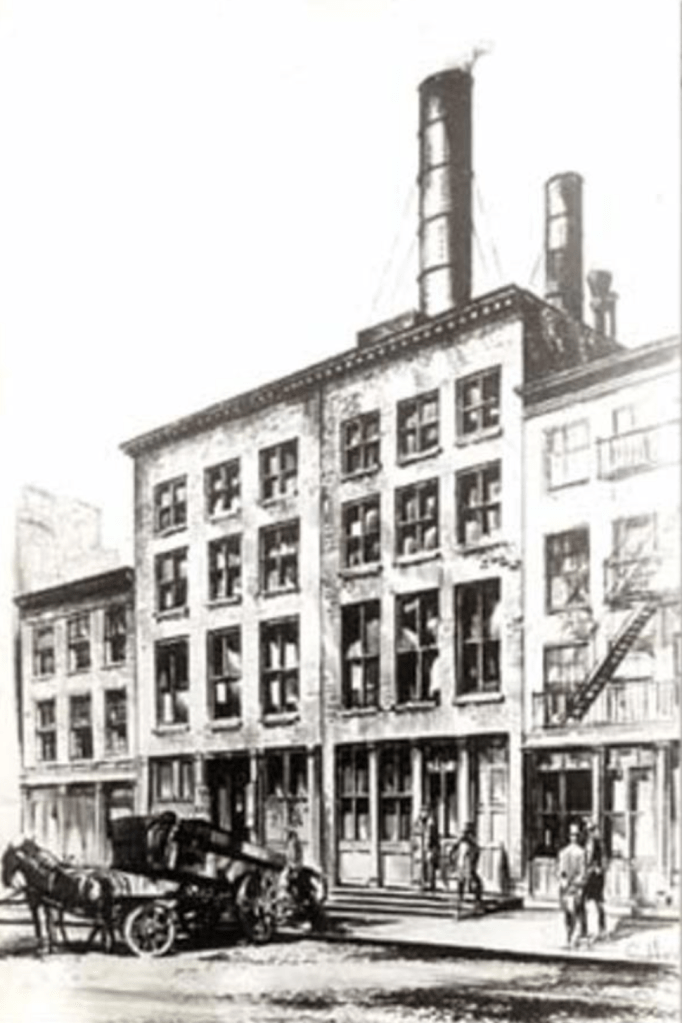
In the episode of The Gilded Age where Thomas Edison lights up the New York Times building- this is rooted in historical fact, though all the characters who were fictional were quite obviously not actually there. In reality, Edison inaugurated the Pearl Street Station on September 4, 1882, marking the first time a central power station supplied electricity to a city. At precisely 3:00 p.m., electric lights illuminated parts of New York City for the very first time, with the Times building among the first to benefit. In The Gilded Age, our lights turn on after dark. I can understand why they chose a nighttime setting over a midday setting- quite a bit more magical.
Although I am sure all those reading are aware of Edison, in summation, Thomas Edison (1847–1931) was one of America’s most influential inventors and businessmen. He held over 1,000 patents and is best known for inventions like the phonograph, the motion picture camera, and the long-lasting electric light bulb. Edison was a pioneer of modern electric power generation and founded General Electric, one of the largest and longest-standing corporations in the U.S.
To Put it Simply:
Many can agree that HBO put great effort into creating a historically accurate television show. Viewers who indulge in this series will be transported back into the late 1800’s, getting a glimpse of both life in New York, as well as in Newport, Rhode Island. There were definitely moments where I was like, “Well, that was under/exaggerated.” But, is that not to be expected when this is television and our genre is historical drama! There are not complaints from me here about the realism here- 10/10.
Rating:
- I. Hate. Tom. Raikes. Everything he does is just so dang annoying. Also, his ability to climb the New York “old” social ladder with ease is frustrating- why is it so easy for him to do this, yet Bertha Russell has an entire storyline about how it’s so hard, and there is an obstacle at every turn. I do not feel like it’s authentic that he could be so disliked by Agnes for not being good enough for Marian, but then get instantly accepted by the old high society at the same time. His existance is a contradiction and his “charisma” is cringe as can be.
- I love the sets; every scene, every room in every home is just absolutely gorgeous.
- I’ve grown to truly enjoy many of the actors and actresses and the characters they were casted for, I love the whole Russell family, Agnes and Ada, Marian, even Aurora. Cheers for the wait-staff and their downstairs drama. I’m here for them all.
If you’ve watched season one of The Gilded Age, I want to know what you thought! Please drop your opinions and comments below and I look forward to hearing from you!


 In With The Old
Leave a comment