Nine Lives Lost, Uncovering the Story Behind the Monument

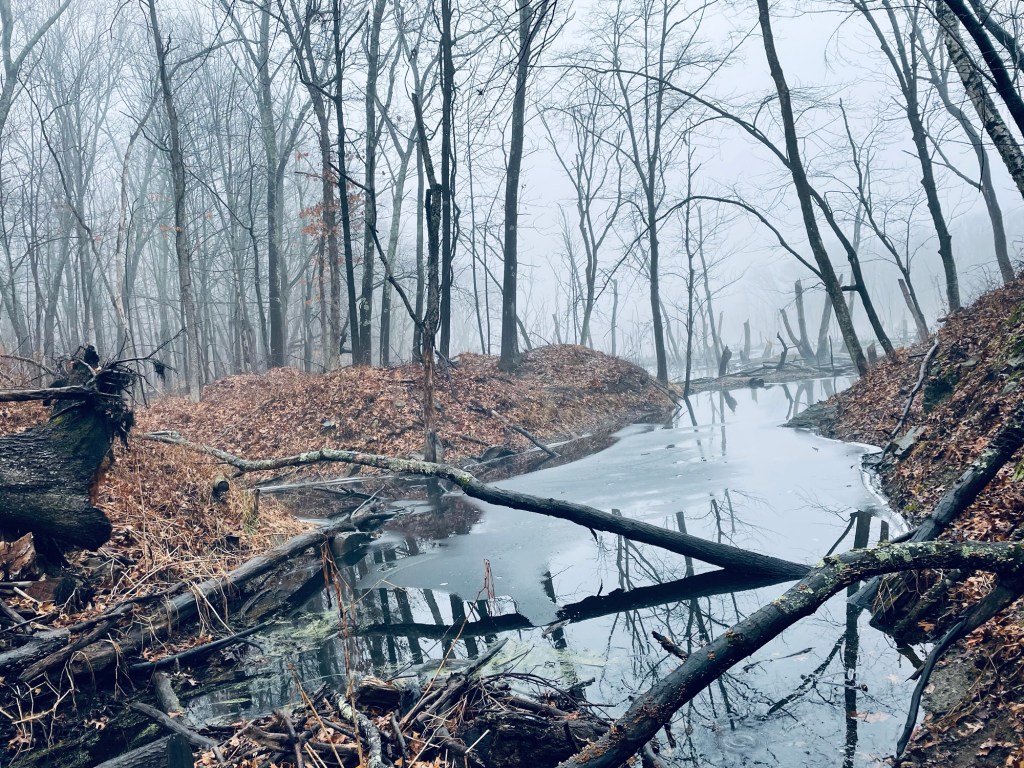
The Nine Men’s Misery Monument has a lengthy history, one that began in 1676. It is often considered as one of the oldest veteran memorials in America. Shortly after the nine deceased soldiers of King Philip’s War were discovered, a stone cairn was constructed to represent the place of their death. These men did not, in fact, get to rest in peace. The cairn was altered several times between its original construction in the 1600’s up until 1928 when it was fortified with mortar and a stone pillar and plaque. It has since been untouched and available to those who are willing and able to walk into the woods behind the Cumberland, Rhode Island Monastery.
To understand the whole history of the monument, it’s important to get background information on King Philip and his war, as well as the Monastery.
I also want to address some of the more dark and mysterious rumors about the resting ground of these soldiers. Let’s get to it.

The Rebel Leader: King Philip’s Fight for Freedom
King Philip, also known as Metacomet, became the chief of the Wampanoag tribe in 1662 after the death of his older brother and father. He was born in 1638 in Massachusetts and died on August 12, 1676 in Rhode Island. Metacomet did not adopt the name King Philip until later in life. Metacomet was the name he was given by his father, Massasoit. Where Massasoit was known for keeping peace between the colonists and the Native Americans under his command, this span of stability was eventually lost under Metacomet’s leadership. It’s not to say that Metacomet desired conflict; it’s just that as time passed and occurrences of land disputes, cultural clashes, and betrayals unfolded- it became increasingly unmanageable. After many years of rising tension and violence amongst Metacomet and the colonists, and an unexpected hanging of Wampanoag warriors at the hands of Plymouth authorities in June 1675, Metacomet made the decision to wage war. After 3,000 Native Americans (Metacomet amongst them) and 600 colonists lost their lives, the war effectively ended.
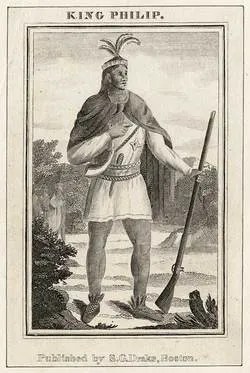
King Philip’s War, also known as The Great Narragansett War, lasted from 1675-1676. Battles broke out between Native Americans and English immigrants in several New England states; Massachusetts, Rhode Island, Connecticut, and Maine over the span of the war.
Some of the more well-known battles include the Battle of Bloody Brook, the Great Swamp Fight, the Battle of Turner Falls, and the Battle of Mount Hope- however, there were many more.
On March 26, 1676, Narragansett Natives pretending to be wounded lay in wait for a militia of Plymouth soldiers led by Captain Michael Pierce to march their way. Once the soldiers approached, they circled back towards their allies, luring the soldiers into a trap. This ambush is known as Pierce’s Fight. The soldiers were estimated to be around 65 in number, whereas it is believed that there were around one-thousand Natives. A group of nine men tried to outrun the ambush, but the Natives caught up with them to scalp and kill them, leaving their tortured bodies where the monument now stands.
A Legacy of Faith: The Monks’ Move from Nova Scotia to Cumberland, RI
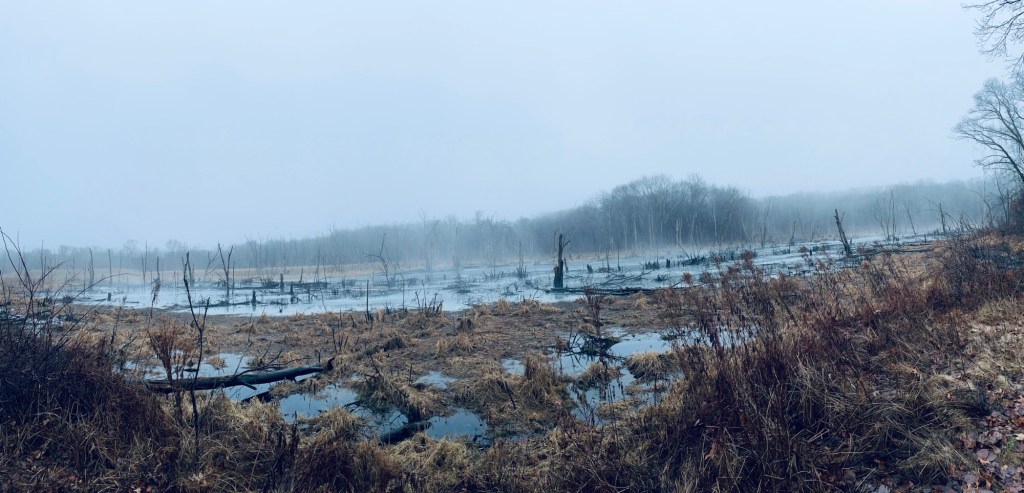
After repeated occurrences of misfortune in their homeland of Nova Scotia, the remaining monks of the Petit Clairvaux Monastery traveled to Rhode Island, United States. The monks acquired approximately 250 acres of farmland from Bishop Matthew Harkins in what is now part Cumberland, Rhode Island. They arrived March 1, 1900.
The history of this plot of land did not begin with the arrival of the monks. Upon the exploration of their newly attained land, the monks came across a stone cairn nestled in the woods. Where the cairn stands is where it is believed nine American soldiers were tortured and killed by local Native Americans as part of the many casualties suffered in King Philip’s War.
Due to previous records of the cairn being disturbed on more than one occasion; in 1928, the monks added cement to the already present stones and reassembled them back into a cairn. A brass plaque was also constructed that same year by the State.
Historical Highlights
- Metacomet’s father, Massasoit, was the Wampanoag chief when the Mayflower arrived in Plymouth, Massachusetts in 1620. He facilitated years of peace with the colonists during his time as chief, or sachem.
- After being beheaded and quartered, Metacomet’s head remained on a pole in Plymouth, Massachusetts for 25 years.
- Benjamin Bucklin’s remains were identified as one of the nine deceased men during an unsanctioned exhumation in 1790. The positive identification was made based on the size of a skeleton matching Bucklin’s large size and the remaining dental evidence. Records and accounts indicate that Bucklin had a full double set of adult teeth.
- Bucklin’s skull was in the care of the Rhode Island Historical Society but was presumably “lost” some time in the 1900’s. After outreaching to the Rhode Island Historical Society for comment on this, they stated, “The RIHS has no known record of ever holding Benjamin Bucklin’s skull in the collection. But the rumor persists. We have also been asked if he had shark teeth, so there is some misinformation out there.”
- In 2014, the History Channel produced a television show called, “Search for the Lost Giants”, where two investigators research the Nine Men’s Misery Monument for evidence of giants, or traces of the biblically referenced Nephilim, due to the description of Bucklin in historical resources.
- In the documentary, the two investigators work with local officials to request access to sanction an archaeological dig of the site to collect information on the buried English colonists.
- One of the episodes of exhumation occurred in 1790 where local medical students, led by a Doctor Bowen, sought to get answers by unearthing the skeletal remains that lie under the cairn, with particular interest in Bucklin’s remains. When the townspeople bear witness to this atrocity, it was stopped.
- Many believe the trails behind the Monastery are haunted. My family visits these woods often, during the day and after the sun has set, and we can say with 100% certainty, no spirits have ever bothered us.
- You may wonder, are the Monks still at the Monastery in present time? Nope. They left in 1950 after another… Fire.
- There is more history within the Monastery trails, including but not limited to; an abandoned quarry and a cart trail.
Final Thoughts
Whether you’re into history (I would assume you were if you’re here), ghosts, or even giants; Nine Men’s Misery has something to offer you. You may also just stumble upon the monument while enjoying the natural beauty of the grounds. While I don’t know for sure if ghosts or giants or Nephilim are real or not, it does peak my curiosity to wonder what actually lies beneath that pile of rocks. Especially when you consider the amount of years it has been there and how many times it has been disturbed. While digging up resting bones is not very polite, I would love for some influential scholars to get their interest piqued and see what’s going on under the ground here. Maybe use some DNA and identify some ancestry. I thoroughly enjoy re-visiting this site and learning more about my local history.
Stay Curious,
– Karissa Boyer


Leave a comment