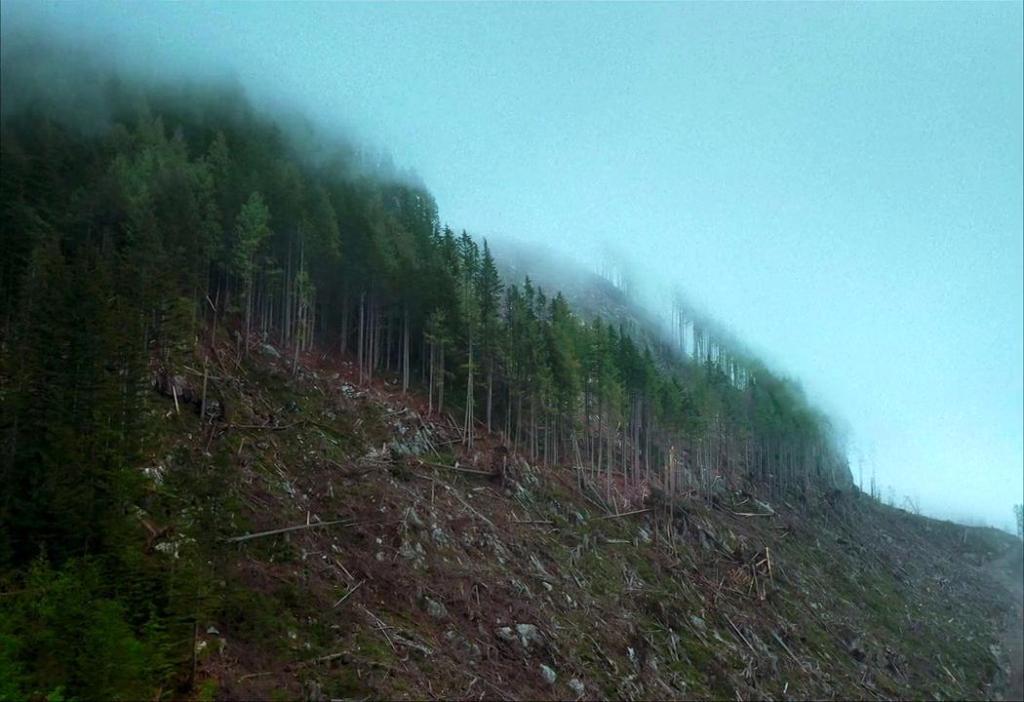
A tale of industry and love, as well as an insightful search into the meaning and purpose of life, Train Dreams draws its audience into the seemingly untouched natural landscape of early 1900’s Northwest to witness both the blessings and curses an ordinary man faces during his life. This ordinary man, Robert Grainier, plays the part of a man who struggles to find earnest work that will allow him to do more than financially support his family, as being there for them physically and emotionally to protect them – to him, was equally as important.
The film dropped onto Netflix late November 2025, as a Netflix exclusive and runs approximately one hour and 42 minutes. The movie was a cinematic interpretation (directed by Clint Bentley) of a novella of the same name, Train Dreams, that was written by Denis Johnson and published in 2011.
I was interested in watching this one from the moment I first paused on its title and got a glimpse of the trailer- simply because of its time period and setting. That being said, I could tell it was going to be a slow-going, sad and sullen movie and I quite honestly just had to add it to my watch list until I felt like I was going to have the emotional space and introspective mind to properly delve into it. This mood arose after the rush of Christmas and New Year subsided and we had a cold, rainy weekend. As the sun began to set I wrapped myself up in blankets and felt all the good and bad feelings Mr. Grainier felt throughout his fictional life; leaving me wondering and imagining how full, yet difficult, the lives were of the generations of Americans that came before me.
For a list of the actors/actresses that brought this book to life, you can visit IMDb.
What to Expect:
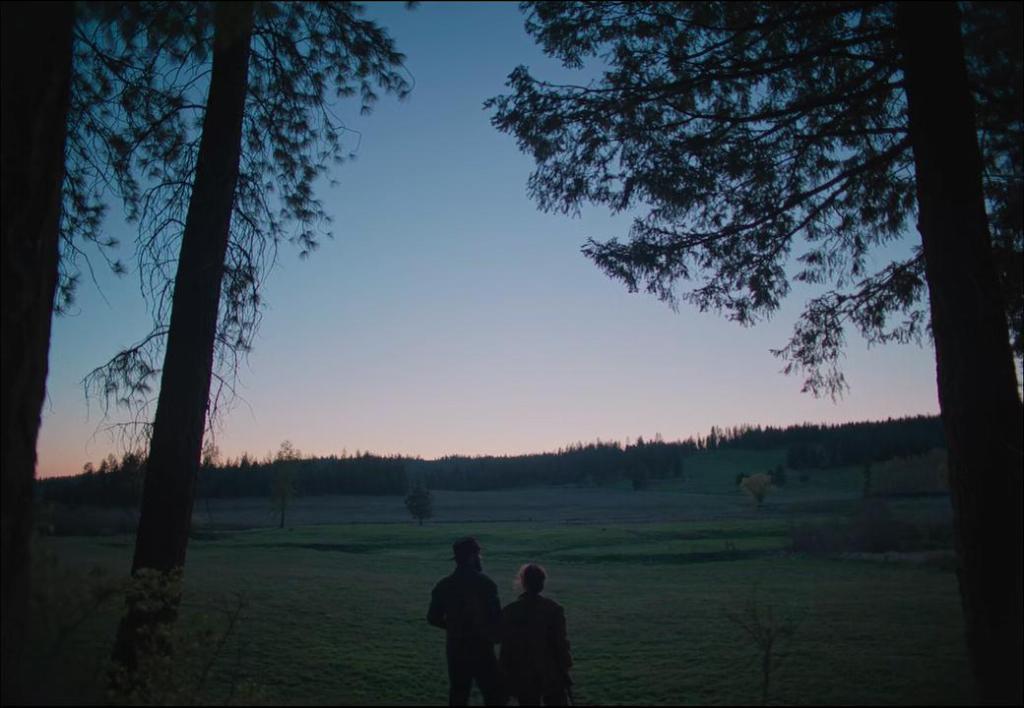
What to expect? Sadness. Expect that. We’ve all watched television shows and movies where people die or go missing and it naturally makes us feel bad for the victims and their families, but this movie takes these feelings to another level. I believe this was achieved by choosing to include lots of little moments between the characters. While most cinematic products often focus on the big memories; meeting someone for the first time, the first date, getting married, the birth of a child; Train Dreams lets the audience in on the moments we do not always get to see. We’re an invading bystander listening in on and watching everyday conversations and daily tasks take place. Throughout the film, the separation between the audience and Mr. Grainier lessens and lessens until finally there is a sense we are understanding what he is feeling before (and if) he even expresses it aloud.
“Strange trails, hidden paths. You’d turn a corner and suddenly find yourself face-to-face with the great mystery; the foundation of all things. And even though that old world is gone now, even though it’s been rolled up like a scroll and put somewhere, you can still feel the echo of it.”
As mentioned, the story takes place in Northwestern United States during the early 1900’s. This area; Idaho, Montana and Washington, are in the midst of a rapid industrial transformation – including, but not limited to, booms in logging efforts and the creation of railroads. Our main character, Robert, primarily worked in the logging industry.
After we do a brief overview of the plot, we will focus in on the various historical topics and references made during the movie to both (1) fact check, and (2) provide additional information since we are all here because we love history, right?
What to expect in terms of plot:
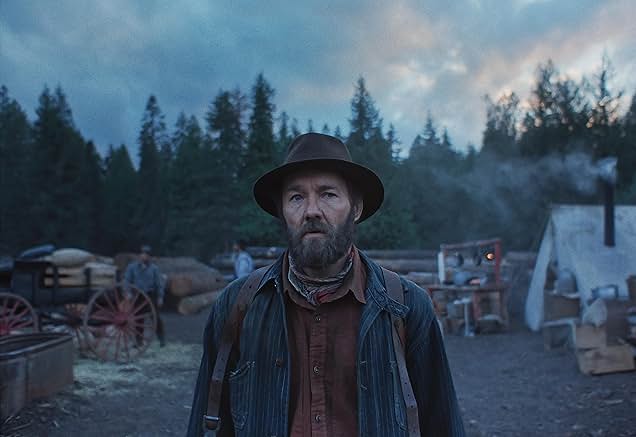
As a child, Robert became an orphan following the death of his parents and was subsequently sent on a train to a town called Fry, Idaho to be raised by others. The movie does not go into detail about who raises him and how that went, but rather, our story starts after he has reached adulthood. Could this be an interesting prequel? – yes I think so.
As an adult, a woman named Gladys catches his eye at a local church. They fall in love quickly, locate a picturesque place to plop a cabin and then one thing leads to another and the two become three. They’re living the American Dream. With all things that seem perfect, there is always room for improvement. Mama Gladys dreams of a life where Robert can making a living close to home, instead of traveling to work and spending a great deal of time away from home.
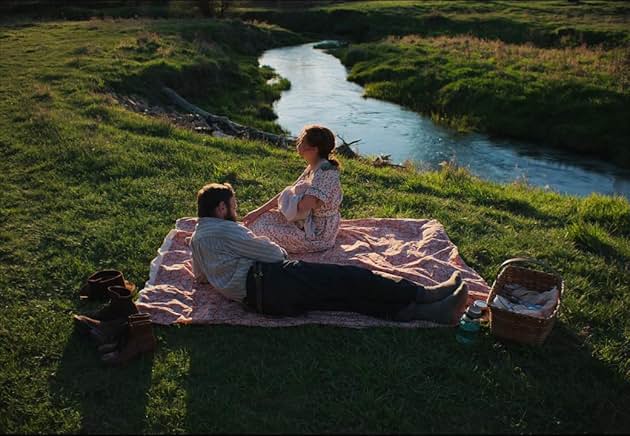
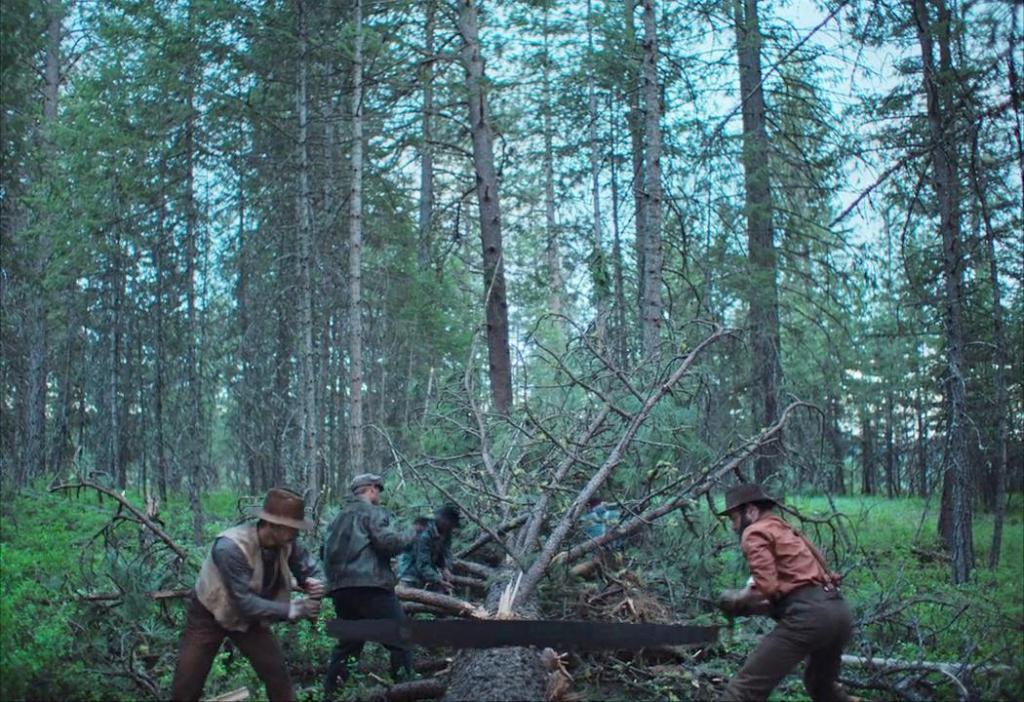
Robert was a talented man with many skills, but his main source of income and his primary occupation was logging. Men from all over would travel to specific cut locations and work long days over several-month spans, felling, hauling and transporting large timber. When a job was deemed complete or the season was decidedly over, the men would return home for some time. Until next time.
Unfortunately, a danger encroached on his land when he was not there to protect it and as a result, he exhausted much of his remaining life emotionally and physically processing what remained.
Let’s Log the Facts … Get it, log?
Fry, Idaho
We were told that this was the town Robert was being sent to after his parents passed. Early on in my research I was under the impression that this town may be fictional as when I searched for its location results ranged from did you mean to search Firth, Idaho to information about a creek, Fry Creek. If it was made-up, my brain was definitely connecting [french] fry with Idaho being infamous as the Potato State. However, I was able to discover that Fry, Idaho was very briefly a town, yet in present time is known as “Bonner’s Ferry”.
- 1864: A ferry was established after gold was discovered in British Columbia. Though the ferry and settlement were named for Edward Bonner, the area evolved over time.
- 1875: Richard Fry leased (and later owned) the ferry.
- The developing town along the south bank of the Kootenai River was first known as “Fry.”
- The first post office operated under the name Fry, with Richard Fry serving as postmaster.
- The immediate area near the trading post was sometimes called Bonnerport.
- An adjoining townsite was named Eatonville.
- 1899: These separate sites (Fry, Bonnerport, and Eatonville) were consolidated and officially named Bonners Ferry.
Mass Deportations
The narrator reflects on the occurrence of a mass deportation of 100 Chinese families from within the town he grew up in when he was little. We know where he grew up was within the Idaho panhandle region, but where was this exactly? The Idaho panhandle is the part of Idaho that stretches northward and is nestled between Washington and Montana. Before reviewing if there was a deportation of Chinese individuals, I first wanted to confirm if there were areas in Idaho that were known to attract Chinese immigrants. According to Forgotten Neighbors: Idaho’s Chinese Immigrants | Idaho Experience, a short video produced by PBS, many of the northwest states did see an influx of Chinese immigrations. With their homeland promoting less than desirable living conditions, many flocked to the west coast to find wealth through gold-mining. After decades of prospecting, the search pushed further inland into areas like Idaho as areas closer to the coast were considered exhausted.
B7 1870, nearly 30% of Idaho’s population was Chinese. In mining towns like Pierce, that percentage was much higher, with some towns almost entirely populated by Chinese. – PBS
As a response to these drastic population changes and apparent racial prejudice, Chinese-American citizens fell victim to a series of discriminatory laws and acts of hostility. At first, it was a tax only Chinese workers were required to pay, a $5 monthly fee. Next, it was the Chinese Exclusion Act of 1882: an act signed by Congress and past President Chester A. Arthur declaring American borders were closed for a period of ten-years for all Chinese. As tensions continued to escalate, a convention in Boise in 1886 acted as a tipping point for communities to begin forcibly removing its Chinese citizens. The mass deportation mentioned in the movie likely occurred during this time period and aligns realistically with recorded American history.
In addition to deportation, Chinese communities were also victims of mob violence, lynchings, and massacres. At the end of the Civil War, remaining populations began to leverage legal representation to regain their footing.
Moyie River
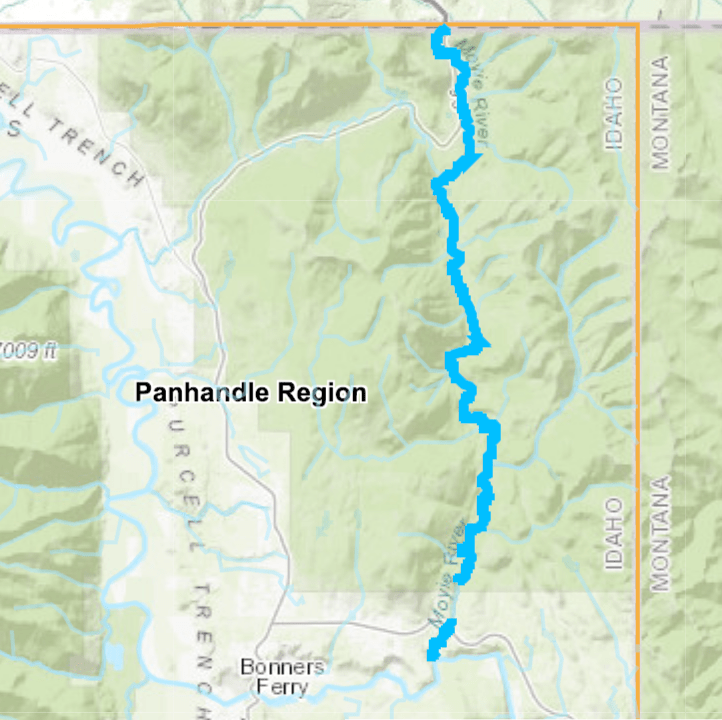
Remember that picturesque plot I mentioned earlier? In the movie, Mr. Grainier builds his cabin on the Moyie River. The river is a tributary of the Kootenai River I mentioned in the section about Fry. As you can see on the map above, we have Bonners Ferry in close proximity to the river. This. Checks. Out.
Logging Industry
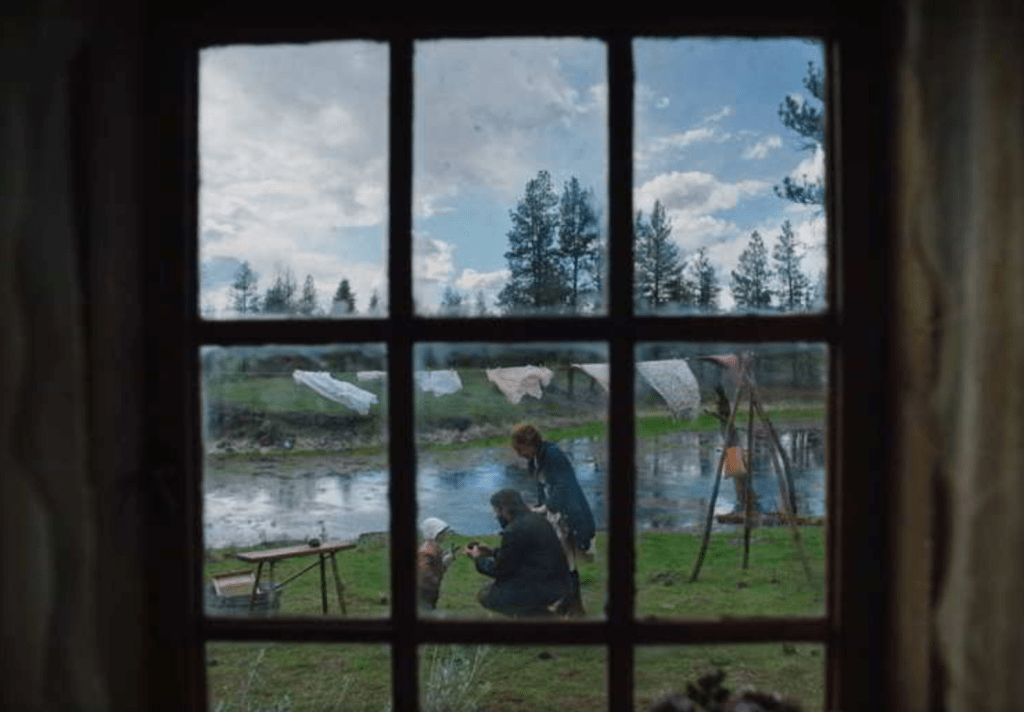
Quite a bit of the movie is dedicated towards information and experiences related to the logging industry. As viewers, we are able to see Mr. Grainier power through multiple logging seasons, his opinions and outlooks changing as he ages older. When he’s young there’s a sense of admiration; respect for the untouched land and pride in his physical ability to earn a living while also contributing towards the positive development of his country. He also values the companionship of others. As he matures, his mindset begins to shift. He worries that the industry is creating irreparable harm to the environment – that they are taking too much without replenishing. He also feels less connected to to his co-workers. The work eventually became foreign to him, the men foreign, and he walked among them unsettled and alone.
Was anything misrepresented? I don’t think so.
Thoughts on his thinking.
I think we can all relate to feeling uncomfortable, isolated or upset when an aspect of our jobs or careers changes: a new coworker, a familiar coworker leaving, a change in management or policy, or different tools or technology required to perform our work. It’s interesting to connect that this has always been a human experience and is not isolated to modern society.
In Train Dreams, there’s a few aspects of the job that were presented to us: men from all over not only the United States, but other countries too, gathered to perform this work. The work was unsafe. A tree or tree limb could fall at any time, intentionally or unintentionally, presenting the possibility of being hit or crushed from above. A log can roll or slide, causing injury. In addition to what was shown, it feels as if much could could go wrong when men are in the backwoods with sharp tools, felling large limbs. Was the logging industry really a diverse workplace? How dangerous was it? Did they really use explosives?
After reading about the history of the logging industry in Idaho on idahoforests.org, I was able to better understand the part the natural landscape played throughout the last few centuries. As more people immigrated to America, more and more wood was needed for development. Prior to the arrival of European settlers, trees were really only being used by Native Americans and Native Americans used them primarily for housing and canoes. In the 1800’s, there were lumbermen who were cutting and selling wood, but they were not really considered a large organization. Most of the trees during this time were being felled by individuals clearing their own land and then using that wood to build their properties. In 1882, when the Northern Pacific Railroad was completed, the Idaho panhandle and surrounding states became easier to access and the shipping of lumber became less painless.
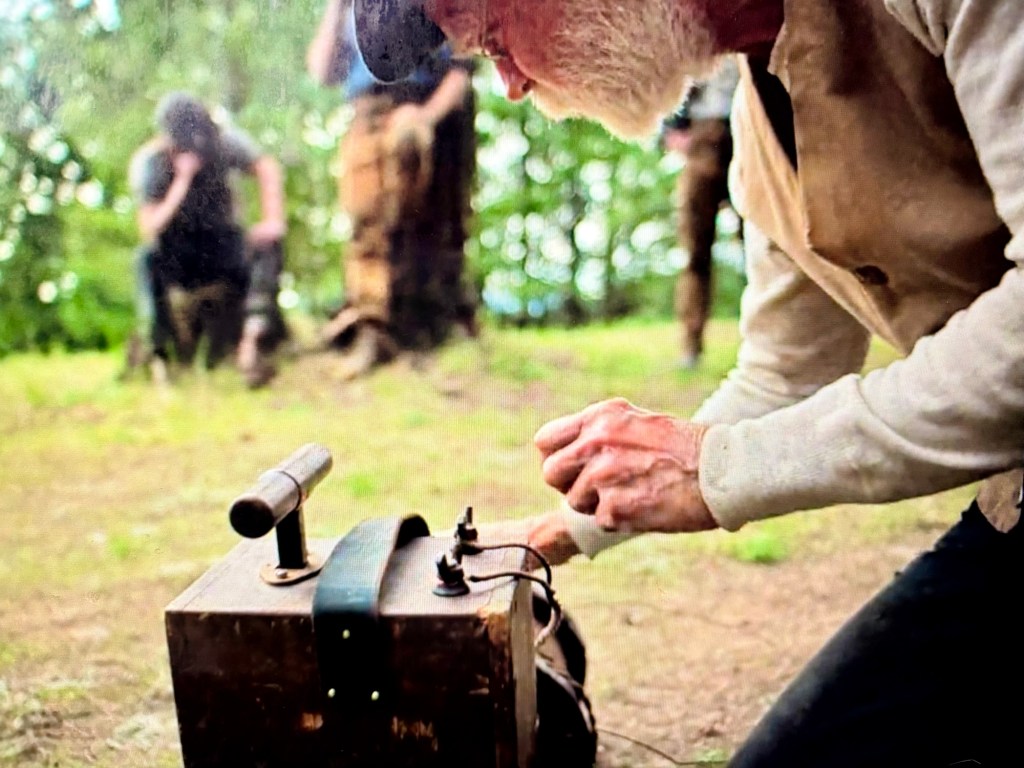
Within the logging industry, there were known roles forest workers would be separated into; choppers, sawyers, limbers, and skidders. Choppers entered the area first and created paths and marked the trees, sawyers cut them down, limbers removed the branches and the sawyers returned to cut the stripped logs. Skidders created tracks (using logs) for the timber to glide on in the necessary direction(s). However, in the early 1900’s, powder monkeys began to surface in the industry – individuals with the know-how to use explosives. In logging, explosives were for several different reasons; to break up stumps or rocks blocking travel, clear log jams and sometimes just for felling. In the movie, Arn Peeples (William Macy), a longtime logger, transitions from being a chopper to a powder monkey. In the photo above, we see him tinkering with a detonator of sorts as the other men watch from afar with a sense of doubt he will be successful. Their disbelief is believable due to the newness of incorporating the role and equipment into logging.
Further more, we see men both getting injured and even die while working as a logger. How unsafe was this industry? In the movie, we are able to witness the danger both a standing and fell tree impose upon those in close proximity. Even in modern times, there is a great danger associated with cutting down a tree. Most of have heard a tree or branch referred to as a “widow maker”, because that is precisely what they are capable of – taking a life. According to the The National Institute for Occupational Safety and Health (NIOSH), nearly 6,400 U.S. workers died each year from traumatic injuries suffered in the workplace between 1980-1989. Unfortunately, fatalities and injuries were not well documents in the late 1800’s into the early 1900’s, but in the absence of agencies designed to create safe workplaces such as NIOSH, we can assume a much higher rate.
It’s no wonder the position paid well.
Robinson Gorge Bridge
In Train Dreams, there is mention that during the Summer of 1917, a bridge called Robinson Gorge Bridge was built by Spokane International. Its creation claimed to shorten the commute from Idaho to Spokane, Washington by 11 miles, rending the previously built bridge over the gorge meaningless.
Upon researching the Bridge, I was able to determine that the bridge does not actually exist and neither does the gorge.
The bridge used in the film is actually the Kinsol Trestle Bridge, located in British Columbia, Canada.
On the contrary, The Spokane International Railroad is a real-life railroad that was founded in 1905 by businessman Daniel Chase Corbin to connect Spokane with the Canadian Pacific Railway at the border.
Fire Lookout Towers
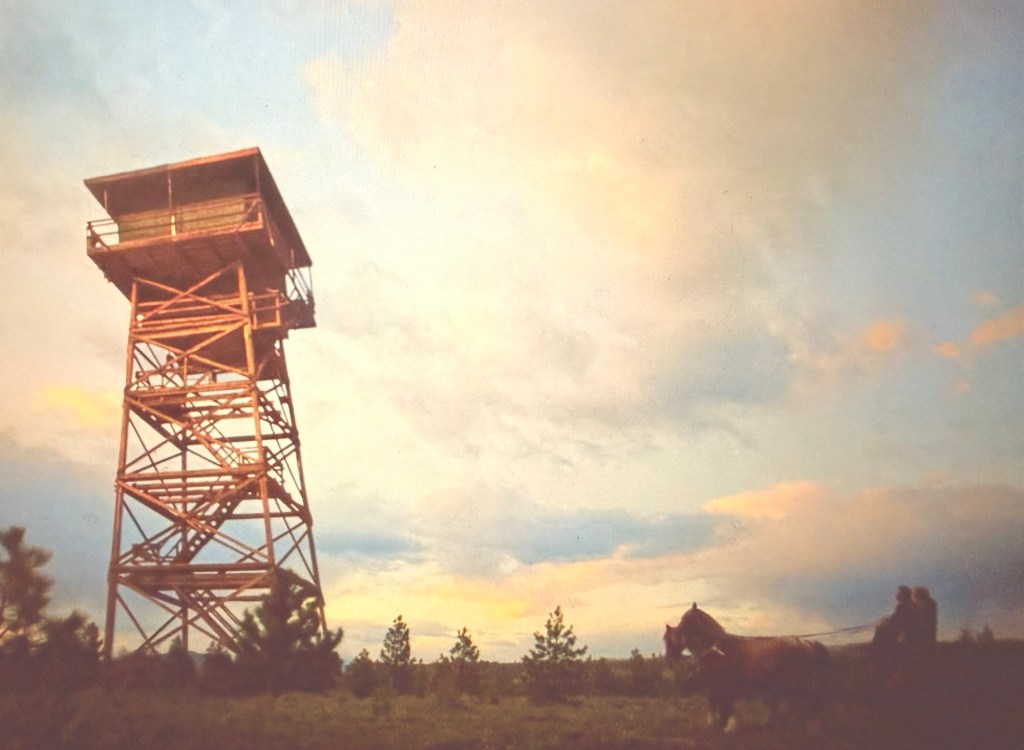
In Train Dreams, Mr. Grainier takes on the task of taxiing a woman, Claire, from a local train station to the location of her new occupation, a remote fire lookout tower. They became acquaintances thereafter. Claire states that she was hired by the U.S Forest Service as part of a federal effort to create and occupy these towers, as to improve earlier forest fire detection rates. According to firelookout.com, there was a 40′ tower that existed one mile southwest of Bonners Ferry within Kaniksu National Forest from 1930-1960. Our fictional character Claire could have feasibly worked here.
Fire lookout towers were relatively uncommon in the late 1800s, but that changed after the massive 1910 wildfire known as the “Big Blowup,” which swept through roughly three million acres in Idaho, Montana, and Washington. In response, the U.S. Forest Service dramatically expanded its fire prevention efforts, allocating funds to construct towers nationwide and employ lookouts as government workers.
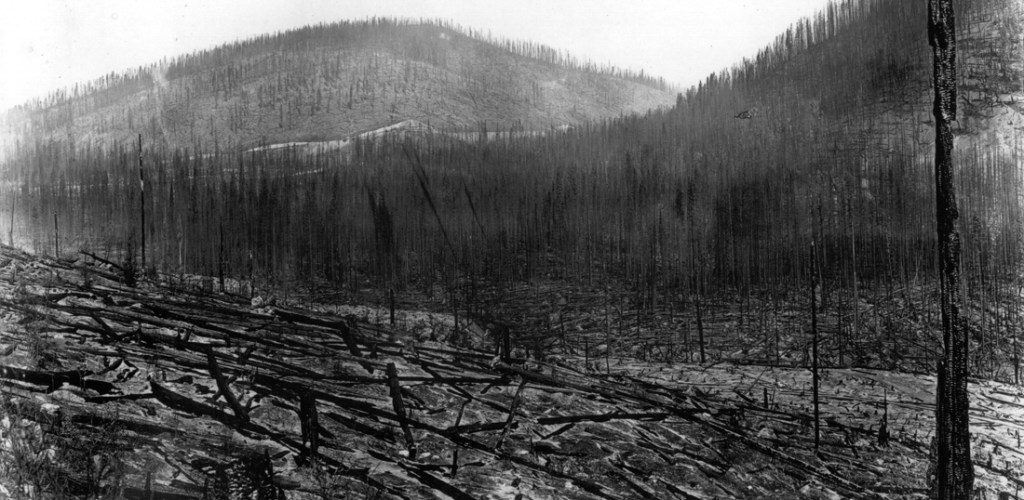
Within just a few years, hundreds of stations were operating and women soon began operating them. In 1913, Hallie Morse Daggett was hired by the Forest Service as the first woman to serve as a fire lookout. While considered as unusual at first, she quickly demonstrated her skill and reliability, ultimately returning for many seasons. Her success encouraged other women to pursue the work, including Alice Henderson, who in 1918 became the first female lookout in New England.
Knowing that the U.S Forest Service did in fact build and fill lookout towers in the 1900’s, that it was not unheard of for women to fill these roles, combined with there being an actual tower in the area our movie is set in – this one checks out too.
Space Travel
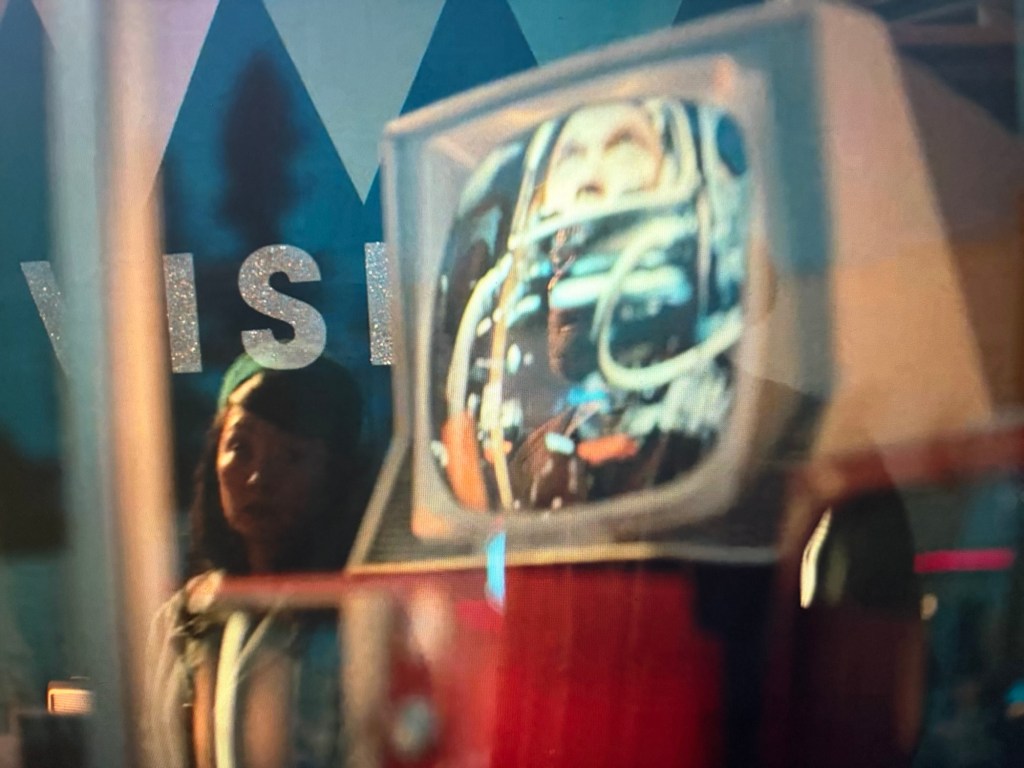
Later in life, Mr. Grainier rode the Great Northern into Spokane, Washington. He found himself in awe of the difference between his rural hometown and bustling urban area, as well as how much Spokane had advanced since his last visit. As he walked, he noticed a storefront television display that was airing a video of an astronaut in outer space. Unsure of what he was witnessing, he asked a nearby bystander who had not been living in isolation for clarification.
On February 20, 1962, millions of Americans watched live on television as John Glenn became the first American to orbit the Earth aboard Friendship 7. The coverage captured the flight’s critical moments, including a view of our planet Earth from space.
This scene checks out. I cannot imagine the strangeness a man like Mr. Grainier would have felt in a moment like this.
Curiosity Shows
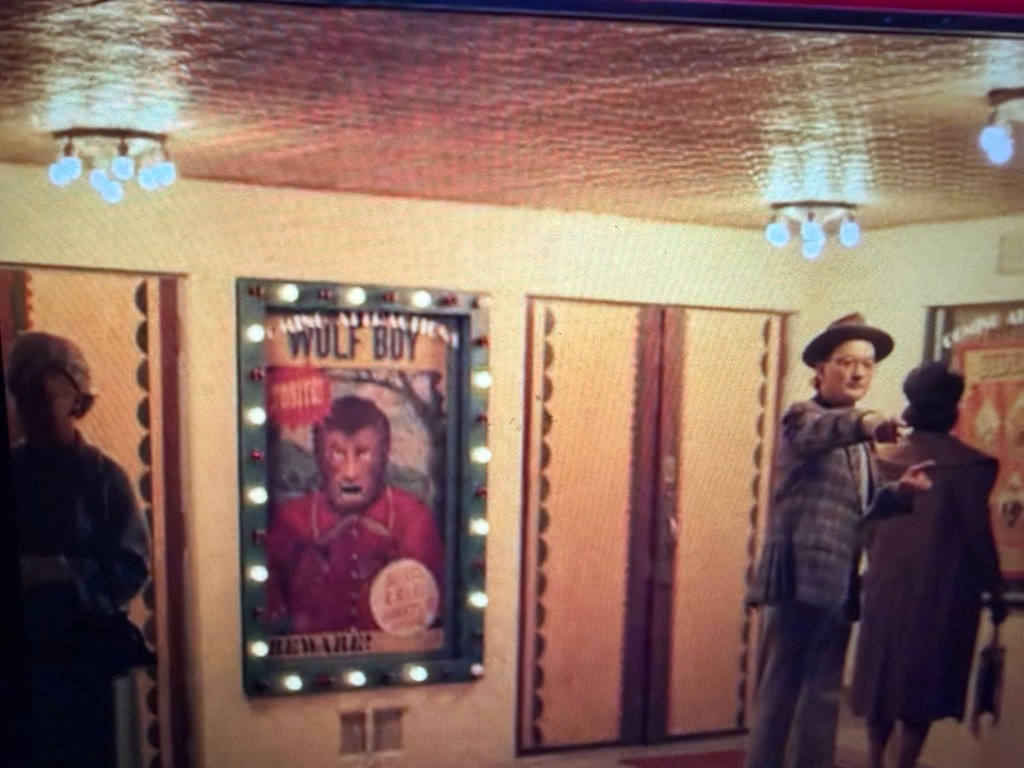
Later that day after the sun had set, Mr. Grainier continued to wander through the city scene of Spokane. A man below a brightly lit neon sign displaying Empire, seemingly a cinema or theater, called out to all to come bear witness to a collection of curious performers; a mind-reader, the mysterious Bittler Sisters and some sort of monstrous boy. Mr. Grainier did attend but the show was not as curious as he was led to believe. Instead, he felt sadness that performers in costume were made to be a spectacle for the “enjoyment” of others.
Many of us have heard of curiosity shows; sometimes called freak shows, sometimes just features or segments of larger circuses- but let’s dig into these specifically mentioned performers a little deeper to see if they existed, as well as the broader history of these type of acts.
The mindreader mentioned, a Sun Tzu, does not appear to have been an actual 20th century performer. Instead, it seems that this was a nod to the ancient Chinese military general who wrote Art of War, an impressive text detailing war tactics and strategies. In the early 1900’s, the text was translated to English and accessible to citizens in the United States. While not a mindreader, his writings showed he greatly understood human nature to a degree where he could anticipate actions and reactions before they even occurred. I can see why a sideshow performer would consider Sun Tzu as a fitting name if their act was to read minds, or pretend to read minds.
I was not able to find any information for The Bittler Sisters but there were a few instances in which sisters performed together at these kinds of shows; Pip and Flip (Jenny Lee Snow and Elvira Snow) who suffered from microcephaly, The Hilton Sisters (Daisy and Violet Hilton) who were born conjoined and The Seven Sutherland Sisters, who were admired for their long, thick hair and musical abilities – to name a few of the most popular. We may never know what medical abnormality or strange talent the Bittler Sisters’ had in Train Dreams, but if I had to guess I would say they were a representation of one of the above figures from history.
Lastly, our Wolf Boy in the poster above.
We have a Fedor Jeftichew, or Jo-Jo The Dog-Faced Boy, who was born in 1868 and passed away in 1904. We know he was employed by P.T. Barnum and performed in the United States for a portion of his short life. Following Jeftichew’s public infamy is the more modern Gomez family in Mexico, where members’ Victor “Larry” Gomez, Gabriel “Danny” Ramos Gomez and Jesus Manuel Fajardo Aceves, among others, have the same extremely rare genetic condition called congenital generalized hypertrichosis (CGH) that Jeftichew had. The condition causes thick, coarse hair to grow on most of the body and is not isolated to males. In the movie, Mr. Grainier said the boy was not a monster but just in costume pretending to be one. It does appear the performer may have had the disorder due to the facial hair we are shown, but it’s also possible this was makeup effects. Nonetheless, there’s no record of a child performer with (CGH) in this area during this time but it’s a plausible situation.
In general, from the late 1800’s through the mid-1900’s, curiosity shows were a popular form of entertainment in the United States, typically attached to traveling circuses and dime museums. Entrepreneurs like P. T. Barnum built careers displaying so-called human oddities, including performers with physical deformities, unusual talents, or carefully crafted fictional backstories. By the early 20th century, these acts blended legitimate medical conditions with theatrical exaggeration. As films, changing social attitudes, and evolving standards of medicine and ethics reshaped public taste in the 1930’s and 1940’s, traditional sideshows declined, gradually giving way to more reformed entertainment.
But on that spring day, as he misplaced all sense of up and down he felt – at last, connected to it all.
To Put it Simply:
Train Dreams brought the time period’s logging industry to life in a nearly perfect image. Of course, characters were conjured and some concepts were altered to create a fictional work – but overall, the major themes were spot on. The industry paid well because it was so dangerous. A hardworking and resilient man could easily support his family with this career, but as we saw, it came with its setbacks. He would be away for long seasons and every time he left, there was a chance he may not have returned. Additionally, the character’s emotional responses to times changing were genuine. Lastly, forest fires. Today, they are still a threat even with systems we have implemented to protect lives and infrastructure. Then, before many of these systems, they were even more treacherous. Overall, this movie is a great watch for those with the space to succumb to a sad, introspective, period-piece.
Rating:
- Absolutely loved the settings. The backwoods scenes where the workers logged and the cabin by the river, *chef’s kiss*.
- Every. Single. Actor/Actress, absolutely nailed it. There was no instances of awkward or poor acting. It felt completely real.
- I’ve seen a few different TV shows revolving around the dangers of forest fires, but many of them were set in modern times. This is the only production that comes to mind, personally, of what life was like as a logger in the early 1900’s.
If you’ve watched Train Dreams, I want to know what you thought! Please drop your opinions and comments below and I look forward to hearing from you!

 In With The Old
Leave a comment