
A Glimpse into Cumberland’s Historic Cemetery on Dexter Street
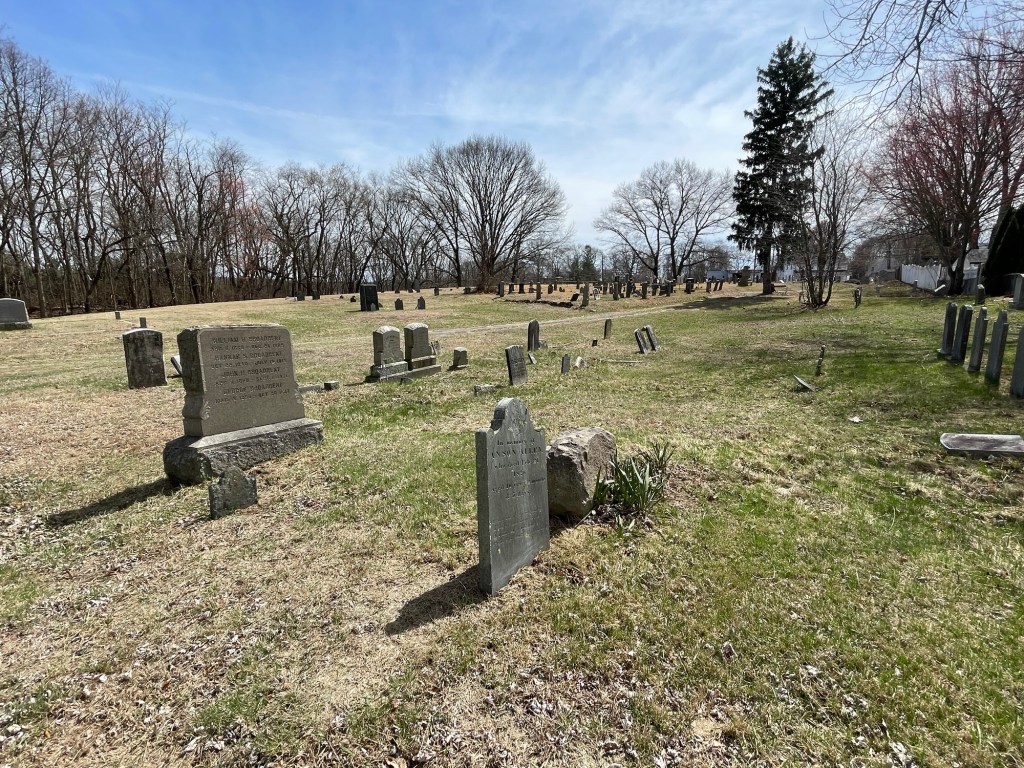
Nestled in the outskirts of Cumberland, Rhode Island, lies the historic Cumberland Cemetery at 220 Dexter Street. This cemetery, rich in history and local lore, is a testament to the town’s enduring history and holds great genealogical significance.
The cemetery serves as the eternal resting place for many local families, some who were laid to rest as early as the 1700’s. The oldest documented gravestone on the lot belongs to a member of the Whipple family; two-year old Jabes Whipple, who died in the year 1759. The oldest birth year that can be found on a stone in the cemetery belongs to a Daniel Smith, who was born in 1703 and died in 1772. The newest addition to the cemetery was as recent as 1972, with a grave belonging to a Romeo J. Lacount. Examining the difference between the oldest birth year and the latest year of death, the cemetery boasts a 269 year-range.
As you walk throughout the cemetery, you will see some surnames more often than others. Dexter, Whipple, Carpenter, Kent, Lee, Miller, Smith, Studley, and Wilkinson, are some of the larger family plots you’ll come across as you walk these grounds.
You can find a complete registry of the 465 graves here.
Ownership
According to the Town of Cumberland, while this cemetery did previously belong to the Dexter family, on May 1, 1827, it was sold to “Elisha Waterman and Others for the sum of $10.00 for the sole purpose of interring the dead and perpetual burying ground”. This information was collected from a town deed book. Based on the inflation calculator available on officialdata.org, ten dollars in 1827 is equivalent to about $315.61 in 2025 in terms of purchasing power- so not a hefty price.
Who was Elisha Waterman?
Elisha Waterman was another prominent figure in Cumberland, Rhode Island during the late 18th and early 19th centuries. He served as a Captain and First Lieutenant in the local company of Minute Men during the American Revolutionary War.
After the property transfer from the Dexter family to the Waterman family, there are no further records of ownership being reassigned. The Town manages the property to an extent, but has made statements that it does not own the lot.
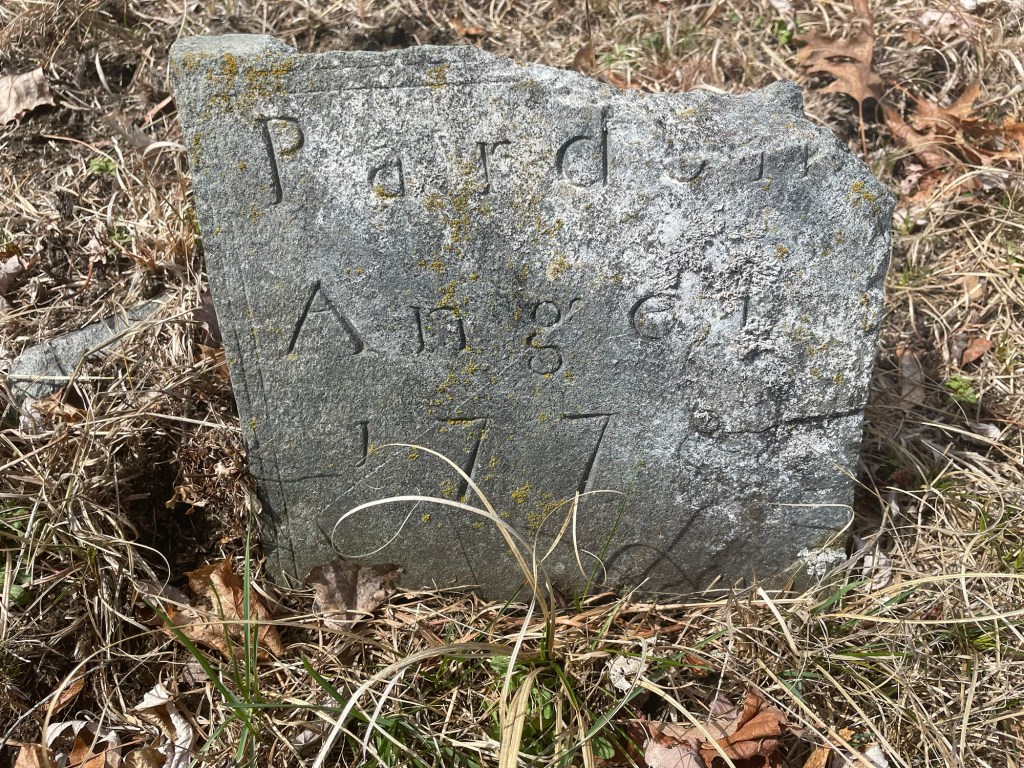
In terms of land upkeep and management, the town has been tasked with general landscaping such as mowing, pruning, and removing excessive weed and tree growth. The gravestones themselves appear to have been neglected. There are many burial markers that have broken into pieces, and either lay atop the ground or are partially buried.
If you believe it’s important that history be well-preserved, please read the information at the end of this post about volunteer opportunities and initiatives.
The Dexter Family
I think it’s important to take a moment to talk about the Dexter family. We know this cemetery is located on Dexter Street, so what do we know about this family?
The Dexter family in Cumberland, Rhode Island, traces its roots to Reverend Gregory Dexter, an early settler who arrived in Providence in the mid-1600’s and became a prominent figure in the colony. Gregory Dexter was granted land by Roger Williams in 1645, and his descendants established themselves throughout northern Rhode Island, including what is now Cumberland.
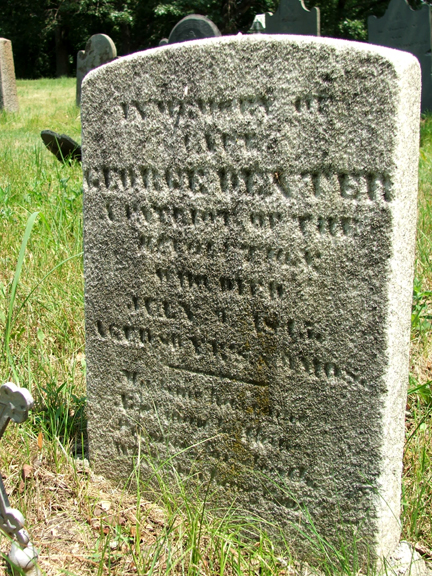
Based on the 1859 publication, “Dexter Genealogy: Bring a Record of the Families Descended From Rev. Gregory Dexter; with Notes and Biographical Sketches of each Parent” by S.C. Newman, A.M. many of the Dexter men in this era were farmers or blacksmiths. Several of the men buried at this cemetery were also military-men and served in the Revolutionary War.
The majority of the Dexters’ buried within this cemetery belong to one large Dexter family, with James Dexter (1720) as their patriarch. James, and Alithea T. Walker (from Seekonk, MA), married and had Hope, James, Huldah, Oliver, Marcy, Simeon, Eseck, Benjamin G., Nancy, Alithea, Lucina, and Timothy W. Only half of the family was buried here. James Dexter was the father of Benjamin G., a Captain in the Revolutionary War. Below their space on the genealogy document is an excerpt;
Nothing has been gathered of this man, except the statement of Mrs. John B. Dexter, that he lived and died in Cumberland, and was a farmer.
Asa Bate’s Lot
At first glance, this lot appears to be all one cemetery, but technically speaking, it’s two. Cumberland Cemetery is adjacent to the Asa Bates Lot (Cu004). Some resources have referred to this subsection as The Old Indian Cemetery even though though those who were buried in this space consist only of deceased Bates’ family members.
With the overgrown and neglected nature of this lot, it may be difficult to spot where it even is. The lot is located on the wooded corner of where Dexter and Curran meet.
On a site visit by the Rhode Island Historical Cemeteries Volunteers in 1993 the lot was described as having been in “terrible” shape and only two gravestones were located. However, according to Lester Hilton is his document, Cumberland Historic Cemeteries, after more clearing of the area some time after this determination, a third stone was located.
Buried on the plot was Betsey Bates, Mary Bates, and Marietta Bates. There is no record of where Asa Bates was buried. It is believed that Asa was born on 11/11/1798. He had his first marriage with Betsey on 02/25/1821 and then after her death, remarried to Marietta on 11/14/1841, two years after the death of Betsey. Mary was the daughter of Asa and Betsey, his first wife.
The three graves had the following inscriptions:
- Betsey Bates- Relict of Asa Bates 03/20/1796 – 12/24/1839
- Mary Bates- Daughter of Asa and Betsey Bates 11/15/1847, aged 20 yrs, 19 days
- Marietta Bates- Wife of Asa Bates 11/12/1858, aged 53 yrs, 13 days
Three decades later, all that is visible of the Lot is the historic sign embedded within the briars and weeds. The overgrowth prevents visitors from being able to see anything more than this, including the three headstones that once stood.
Volunteer Opportunities
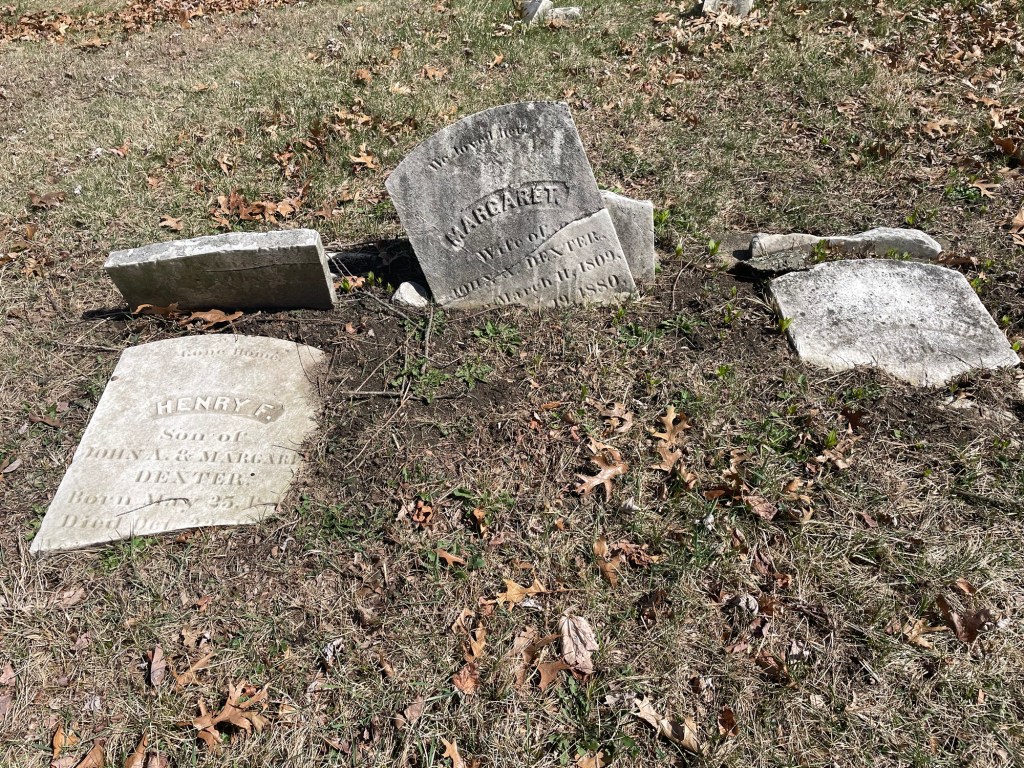
It’s clear after visiting this cemetery and viewing it in its shambled state, the site could use some help. It’s no surprise it’s fallen to disarray, repairing primitive gravestones is no easy (or affordable) feat. Repairing broken tombstones typically costs between $200 and $1000 per stone, depending on the extent of the damage, type of stone, and labor involved. Minor repairs like fixing small cracks or chips and cleaning are more affordable, while extensive damage, stone replacement, or inscription restoration can be more expensive. Some repairs can be done with specialized epoxy adhesives designed for stone bonding, but professional help is often needed for significant or historic stones.
In the past, the Town of Cumberland has hosted Historical Cemetery Preservation Workshops with the expertise of the North Smithfield Heritage Association. In these Workshops, demonstrations focused on gravestone cleaning practices involving water, biological solutions, and soft brushes.
Concerning the clean-up of debris, trash, and overgrowth, I was able to locate a 2021 news article by The Valley Breeze, advertising a cemetery restoration date for the Cumberland Cemetery among others for three hours on April 24th, 2021.
In this article, a Facebook page was linked with more information. When I visited this page in present time, I was able to see that these efforts have not ceased.
Based on the social media page, “Greater Rhode Island Historical Cemeteries“, there are many resources and volunteer opportunities to improve our local cemeteries. If you are not a resident in or nearby Cumberland, Rhode Island, I encourage you to reach out to your town and see if similar opportunities exist near you.
One Among the Many
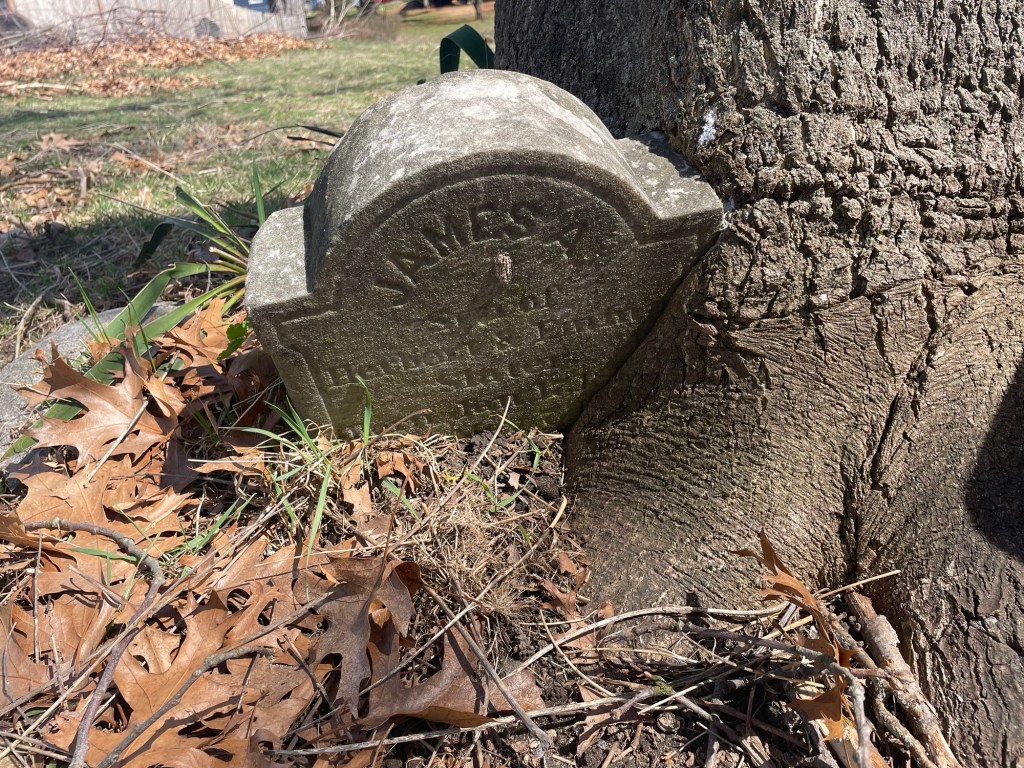
Cumberland, Rhode Island has more historic cemeteries within its city boundaries than one would think. 40, to be exact- according to the Rhode Island Historical Cemeteries database. These include family plots, churchyards, and larger burial grounds, many of which are documented with historical markers and records.
Some of the oldest cemeteries in Cumberland, Rhode Island, include:
- Elder Ballou Cemetery: Established on land donated in 1749, it contains burials dating back to at least the mid-1700’s.
- Whipple-Smith Cemetery: Located near Elder Ballou Cemetery and containing only 17 burials, this site also dates back to the 18th century.
- Quaker Cemetery: Dates back to the 18th century and is associated with the early Quaker (Religious Society of Friends) settlers in the area.
- Peck Cemetery: Contains the oldest burial in Cumberland, belonging to a John Sweetland (1633-1711) and is decorated with once buried steps made from duplicate gravestones.
To read more about the these four sites and the remaining 35 we’ve not mentioned, I encourage visiting this site.
Additionally, while John Sweetland is often referred to as the oldest burial within a historic cemetery, the Nine Men’s Misery monument trumps this date by approximately thirty-five years. What’s the Nine Men’s Misery monument, you ask? Check out my other blog post to find out.
Final Thoughts
I enjoyed my visit here. It’s so fascinating to see the older stones, read through the multitude of epitaphs, and gain insight on the families that once lived in the town. Quite honestly, the research I had done and the resources I read through after the visit were nearly as entertaining as the visit itself. In a sense, it created a more full picture of these families and what life was like hundreds of years ago on the same streets we walk in the present. In terms of the location and condition of both the plot of land and the stones, without intervention, this site seemingly will not make it too many more decades. It’s been insightful to learn about the initiatives the town and state have brought forth to reverse this natural deterioration. Regarding location- when visiting, there is a sense of discomfort being surrounded by residential properties. It’s feels as if you’re trespassing. In fact, a local police vehicle parked nearby why we strolled and took pictures, likely to confirm we weren’t there to loiter or cause any damage. There is a lot of historical significance packed into this small space, and it’s our job to properly document it as it exists today, and create a plan to preserve it for future generations.
Stay Curious,
– Karissa Boyer

 In With The Old
Leave a comment