
The presence of tea carts originated during the Victorian Era. The Victorian Era revolves around the reign of Queen Victoria of the United Kingdom, which spanned from 1837 to 1901. The era, or “age”, also encapsulates approximately 10-15 years before and after her reign. A lot happened in the United Kingdom during this time. Britain was considered the most powerful empire in the world. It was politically, economically and culturally strong. As documented, this strength dwindled towards the end of the age, mostly due to the ongoing conflict in the United States.
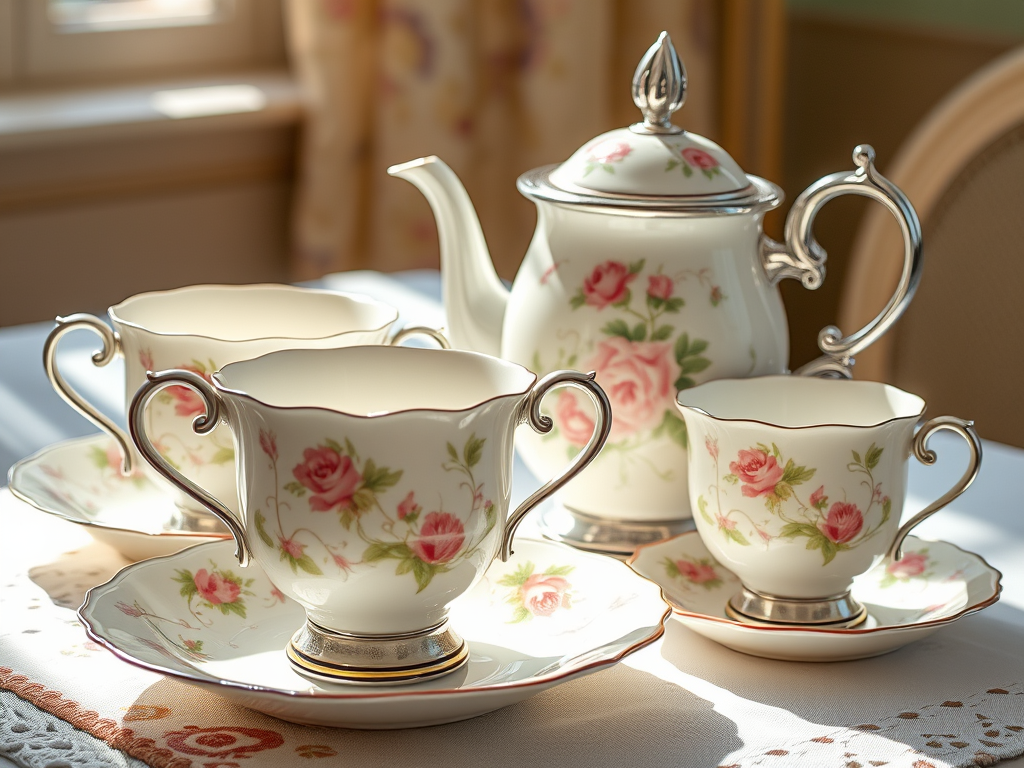
While not everyone in the United Kingdom was wealthy, many within the class-based and hierarchical society began to embrace the art of homemaking. Part of homemaking, or housekeeping, meant that tea was being served around the clock. Tea was typically served by a maid or servant. Tea carts, or tea trolleys, also had a selection of light foods such as sandwiches or biscuits. Over time, this style of furniture began to surface in America as well. I mean, how could it not? They were both stylish and functional.
In both the United States and the United Kingdom, the teapot and teacups were the staple spread of the trolley for generations to come. However, in the United States, a new thirteen-year era arose that caused the cart to evolve. From 1930-1933 the Prohibition era exhausted the growing nation. Sure, there are some good things that come from banning alcohol transportation and consumption. (Maybe some alcoholics kicked the habit? Maybe?) Probably not. But, for the most part, the Prohibition was crazy. Spoiler alert: Alcohol did not in fact stop getting transported and consumed. People still drank in public and private. People bootlegged alcohol, and many got arrested or killed for doing so. Families were torn apart. Bars, saloons, and alcohol production companies fell under. The list of impacts goes on and on.

My point in mentioning the Prohibition and how it transformed tea carts is that now these carts were used for more than just tea. They now began to cart alcohol. Maybe your household trolley toted tea, maybe it toted alcohol. Or both- hot toddy anyone? As drinking alcohol became more of a household habit than prior as it needed to be hidden from law, it was standard for someone to have a display of spirits or wine on a cart with serving glasses.
For a quick minute this was pretty common and many middle-class households had the luxury of some sort of wheeled cart of trolley in their house. However, from 1929-1939 the Great Depression reared its ugly face and the cart (among anything non-essential) once again became a symbol of wealth.
Back in the United Kingdom, they were not undergoing the Prohibition or Great Depression and the tea-drinking and usage of trolleys never really subsided.
Naturally, when a trolley has a display of alcohol, it’s not called a tea cart. Most commonly referred to as a cocktail cart or a bar cart, the functional furniture boomed in popularity in the 1950’s.
While the furniture type has been around for centuries and transported both tea and alcohol through both homes and businesses, they’re still around. There’s antique and vintage ones still rolling about, and new productions are still available for purchase as well. Their ease and purpose is just irreplaceable.
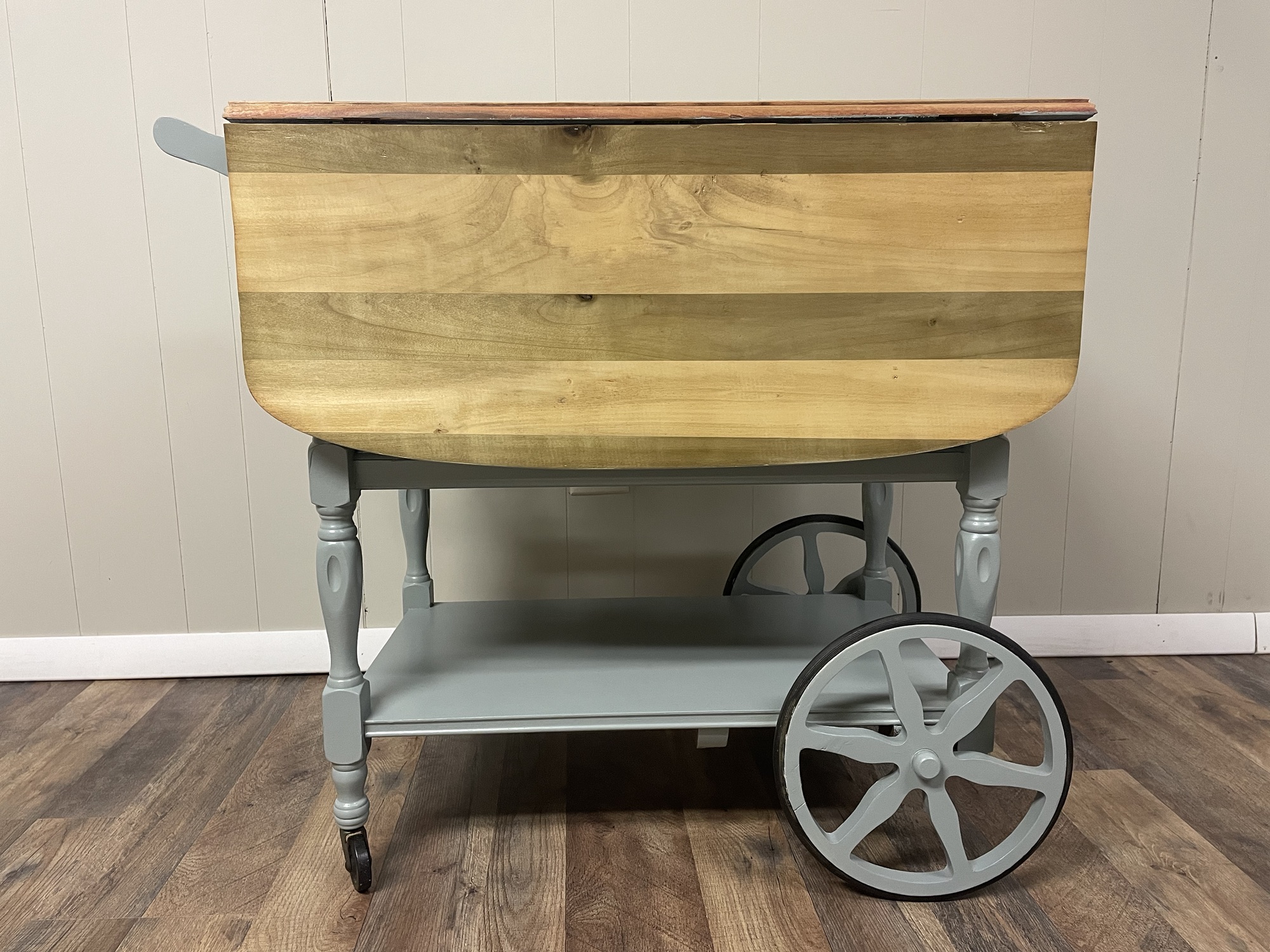
I recently came across the former; a vintage tea cart. Unfortunately there were no brands imprinted on this piece, so identifying its origin and age was difficult. Per my research, I was only able to decipher that it was produced some time between 1900 and 1940. The previous owner stated it was owned by her grandmother and purchased prior to 1940.
I purchased this desk from someone locally on Facebook Marketplace for $15. Here it was it looked liked before:

Handcrafted Renewal:
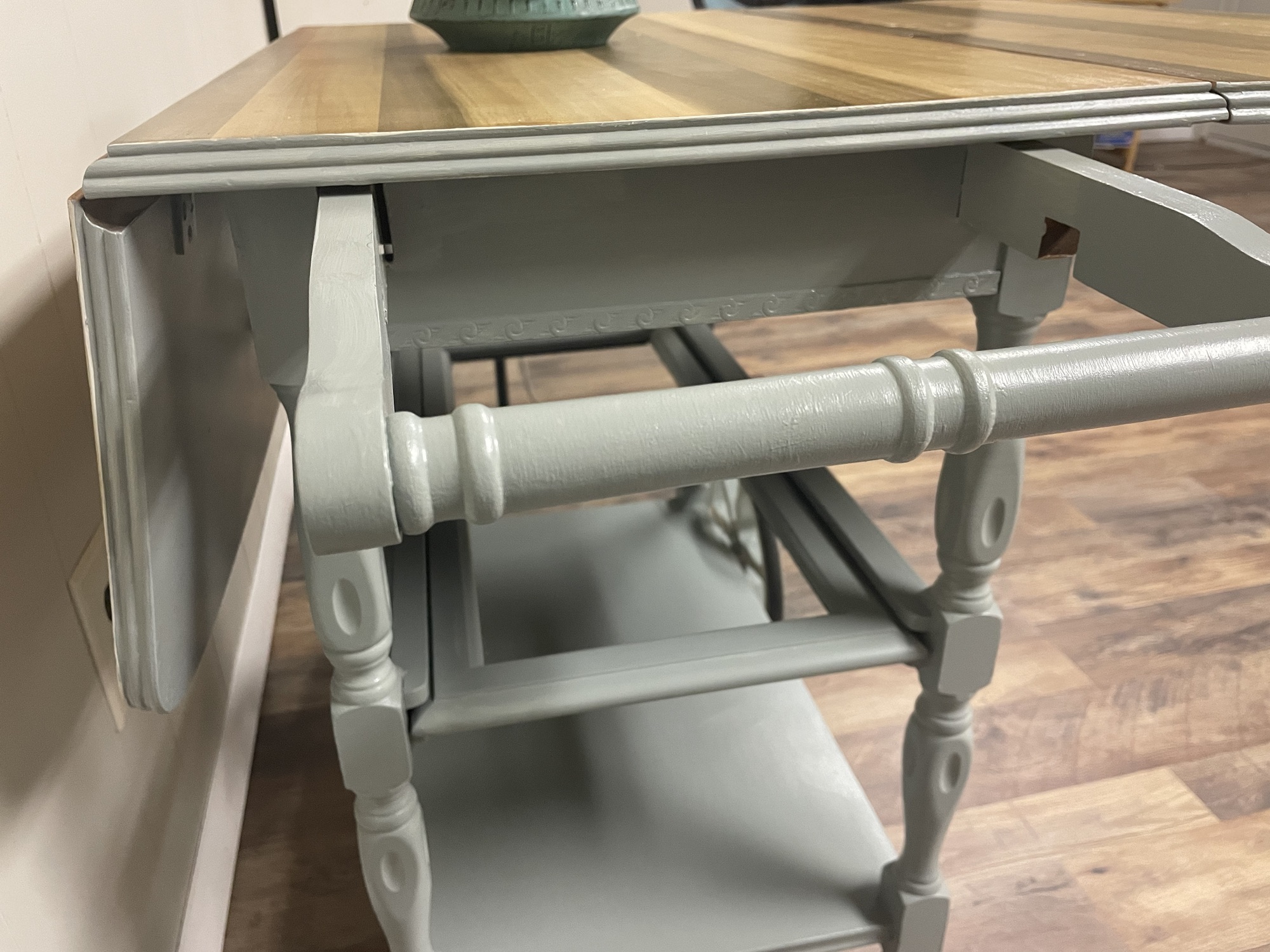
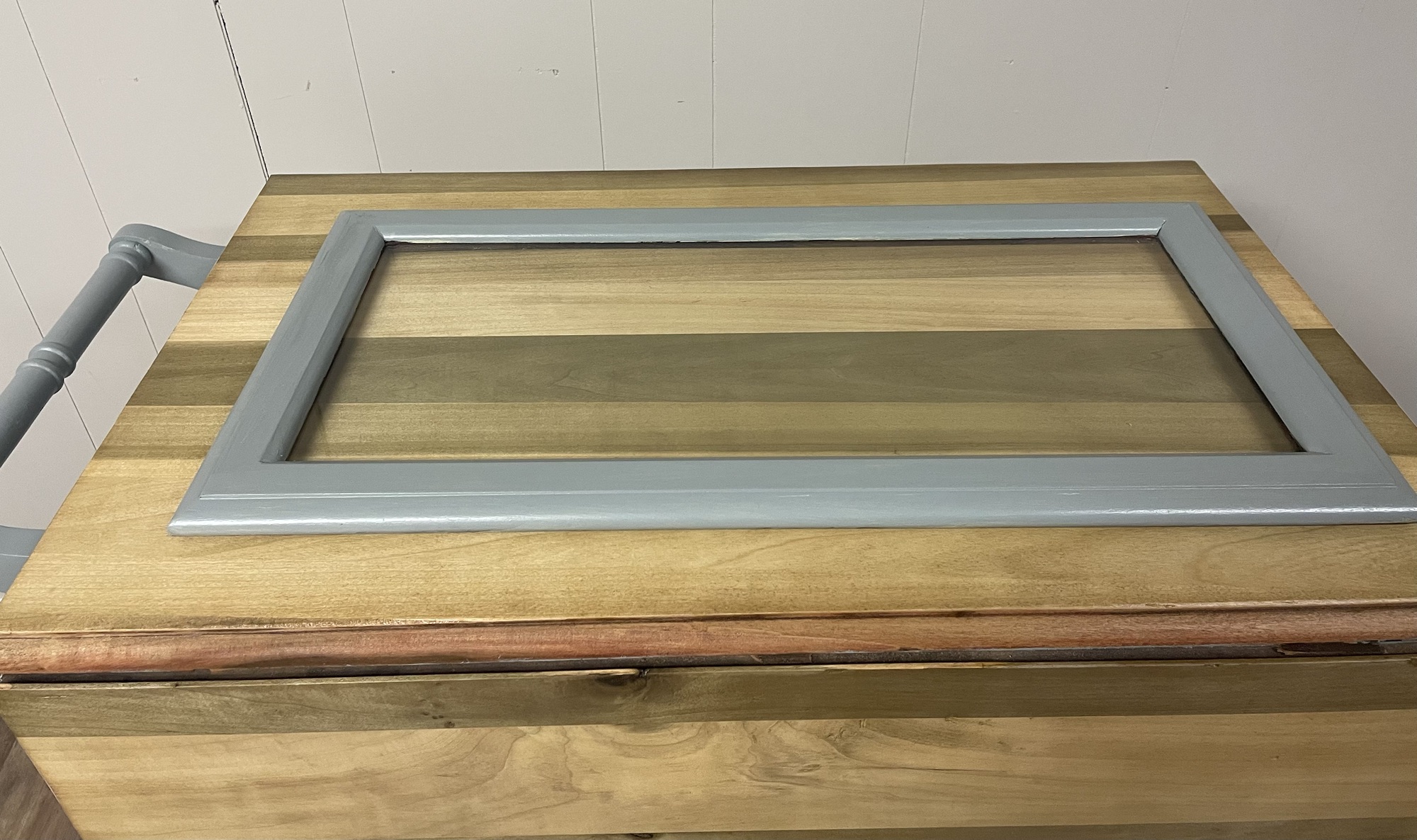
- Veneer was removed off of the top surface. Remaining glue removed and surface sanded to raw wood.
- Remaining surfaces scuff sanded and painted with custom-mixed furniture paint.
- Peeling veneer on wheel faces was repaired with glue.
- Wheel system was lubricated with white lithium grease.
- Top surface was coated with Polyurethane.

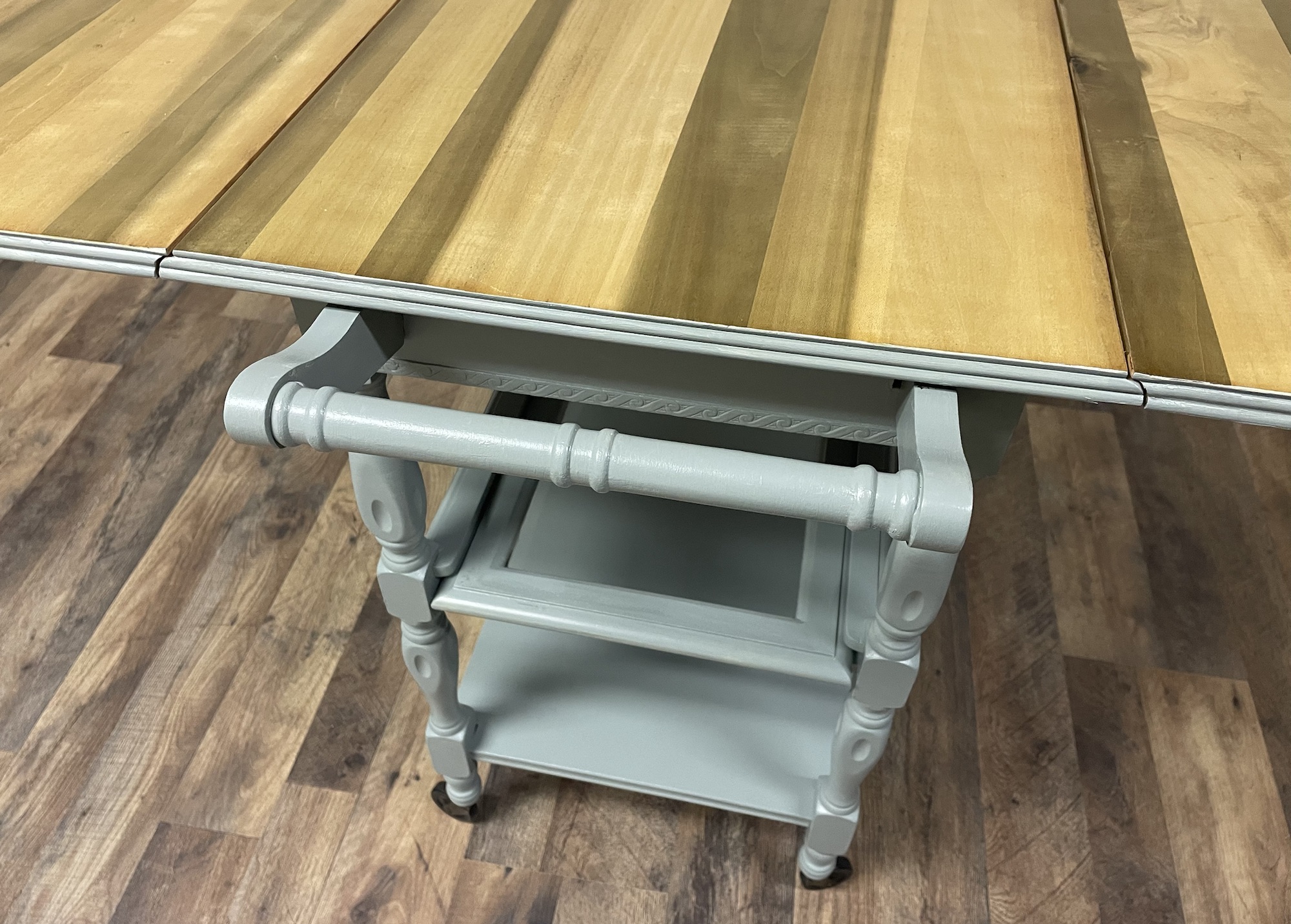
Product Description:
- Height: 28 in
- Width: 27.75 in
- Width: (w/ wings) 39 in
- Depth: 17.5 in
- Wheel Diameter: 10.5 in

 In With The Old
Leave a comment